

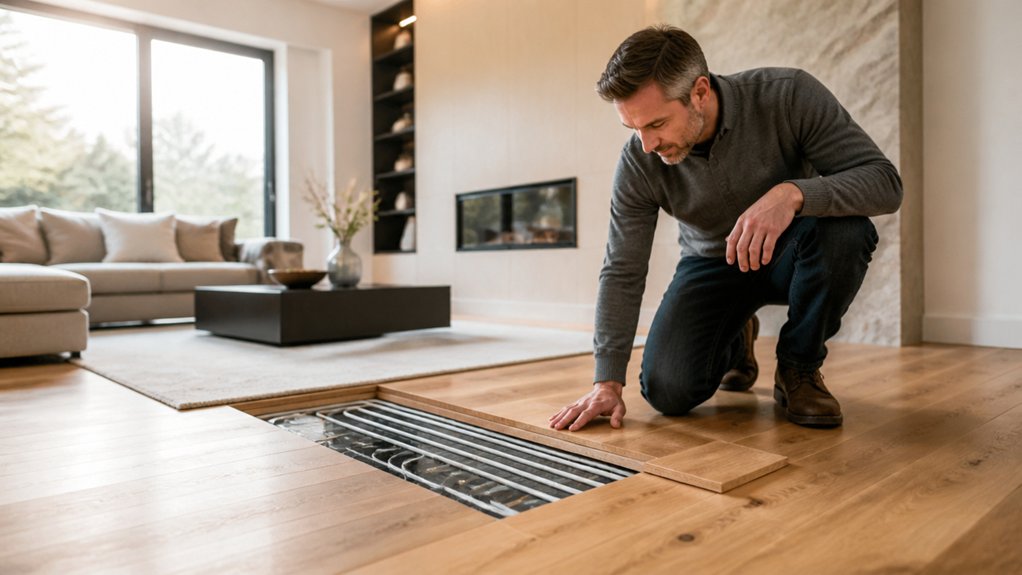
A warm floor can turn your remodel into a foundation for lasting comfort. With hydronic underfloor heating, you’ll get even warmth, fewer drafts, and the potential for lower energy bills when you pair the system with good insulation and zone controls. Installing it during renovation can also simplify the work and suit your flooring plans. But the right choice depends on more than comfort alone.
Why Does Hydronic Heating Feel More Comfortable?
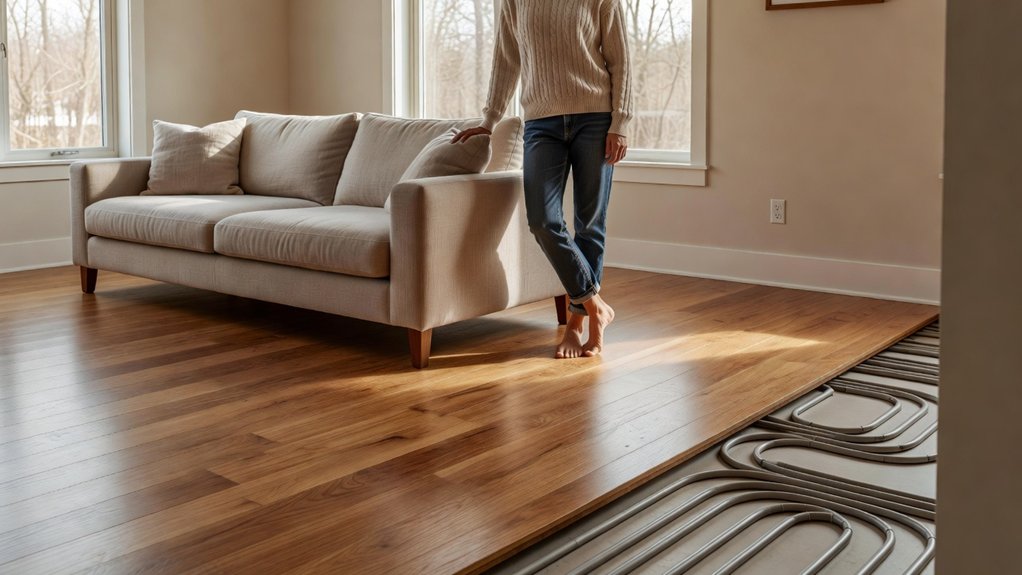
Hydronic underfloor heating warms the room from the floor up, creating a more even temperature than systems that rely on hot air blowing from vents. You feel warmth across your feet and living space, rather than a blast of hot air followed by a chill.
Because the system distributes heat through tubing beneath the floor, it reduces cold spots and drafts that can make you adjust the thermostat repeatedly.
This steady warmth supports comfort enhancement in rooms where you spend time sitting, standing, or walking barefoot. You can also use zone controls to set different temperatures for separate areas, giving you practical temperature regulation that matches your routine.
Choose floor finishes suited to radiant heat, and work with a qualified installer to plan the layout. The result feels consistent and unobtrusive.
How Efficient Is Hydronic Underfloor Heating?
That even, steady warmth can also help you use energy more efficiently. Hydronic systems circulate heated water through tubing, delivering heat across a broad area rather than relying on hot air from a furnace. You can often set your thermostat lower while maintaining comfort, which may reduce fuel use.
Energy efficiency depends on your home’s insulation, system design, boiler or heat pump performance, and controls. A qualified installer can size the equipment and balance the circuits to avoid wasted energy.
For cost savings, consider your local energy prices, installation costs, and expected operating hours. Hydronic heating can be economical over time, especially when paired with an efficient heat source and smart zoning.
You can heat frequently used rooms only, instead of maintaining the same temperature throughout your home. Regular maintenance helps preserve performance and control ongoing costs.
Which Floors Suit Hydronic Underfloor Heating?
Tile and stone transfer heat efficiently, making them strong choices for hydronic underfloor heating.
You can also use engineered wood or vinyl, but check the manufacturer’s temperature limits and installation guidance.
Choosing a compatible floor covering helps protect your investment and maintain reliable performance.
Tile and Stone Floors
Because tile and stone conduct heat efficiently, they’re among the best floor coverings for hydronic underfloor heating. Their thermal mass stores warmth and releases it steadily, helping you maintain comfortable temperatures with fewer fluctuations.
Porcelain, ceramic, slate, and natural stone can all work well when your installer designs the system for the chosen material and room.
You’ll also have broad design options, from large-format porcelain to intricate Decorative patterns.
Before installation, confirm that your tile, setting materials, and subfloor suit the heating system; proper preparation helps prevent cracking and uneven performance.
Follow the manufacturer’s temperature guidance, and raise heat gradually after installation to protect grout and tile.
Regular grout maintenance keeps joints clean and intact, while sealing porous stone as recommended helps preserve its appearance over time.
These durable surfaces can make heated floors a practical, long-lasting remodel upgrade.
Engineered Wood and Vinyl
Engineered wood and vinyl can work with hydronic underfloor heating, but you’ll need products specifically rated for radiant heat. Check the manufacturer’s maximum surface-temperature limit and installation instructions before you buy.
Engineered wood’s layered construction generally handles temperature changes better than solid hardwood, but excessive heat or rapid swings can still cause gaps, warping, or finish damage. Choose a stable product, keep indoor humidity consistent, and follow recommended heating and acclimation procedures.
Vinyl flooring offers another practical option, especially in kitchens and bathrooms, because it’s durable and easy to clean. However, some vinyl products can discolor, soften, or release odors if exposed to excessive heat.
Confirm that the flooring, underlayment, and adhesive are compatible with hydronic systems. Your installer should control water temperature and raise it gradually, helping protect your floor while delivering steady, comfortable warmth.
When Should Hydronic Heating Go In?
Plan hydronic heating during a major renovation, when you can access the subfloor without disrupting finished rooms.
Install the system before laying your flooring so the pipes sit beneath the finished surface.
Coordinate the work with your builder and flooring installer to keep the schedule on track.
During Major Renovations
A major renovation is often the best time to install hydronic underfloor heating, while floors are already exposed and plumbing or electrical work is underway. You can coordinate the heating layout with your contractor before rebuilding rooms, reducing disruption and avoiding costly changes later.
Have a qualified designer assess insulation, floor structure, heat loss, and boiler or heat-pump capacity; these factors determine whether the system can deliver comfortable, efficient warmth.
Renovation also gives you a chance to plan smart thermostats and zoning controls around how you use each room, rather than relying on one setting throughout the home.
Confirm responsibilities among your heating, plumbing, and electrical trades early, and include commissioning in the project schedule.
Careful coordination helps you integrate the system with the wider remodel and manage costs without compromising performance.
Before Flooring Installation
Before flooring goes down, install and pressure-test the hydronic heating pipes or panels so any leaks can be fixed while the system remains accessible. Coordinate this timing with your plumber, flooring contractor, and remodel schedule; don’t wait until the finish floor is ready.
Your subfloor must be clean, level, and suitable for the chosen system. Confirm that the heating assembly fits the planned floor height, door clearances, and progression to adjoining rooms.
Flooring materials affect heat transfer and system performance. Review the manufacturer’s temperature limits and installation requirements for wood, tile, or other finishes before you choose them.
Once testing passes, document pipe locations and protect the system during subsequent work. Follow the specified curing and moisture checks before covering it.
Careful sequencing keeps the installation process efficient and helps prevent costly damage beneath your new floor.
What Does Hydronic Underfloor Heating Cost?
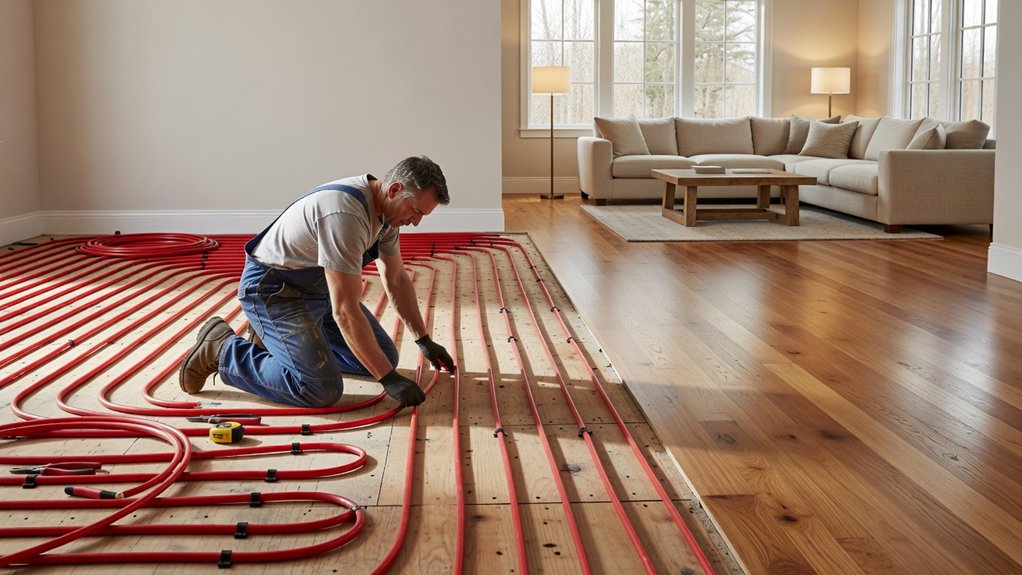
Hydronic underfloor heating typically costs more to install than electric systems, but your total depends on the heated area, floor construction, insulation, and whether you’re fitting it in a new build or a renovation.
For an accurate estimate, ask installers to assess your plans and itemize materials, labor, controls, and any boiler or heat-pump upgrades. These pricing factors can shift the budget considerably, especially when a remodel requires removing flooring or raising floor levels.
A cost comparison should also account for operating expenses: hydronic systems can use less energy over time, particularly across larger areas, but savings depend on your home’s insulation, energy rates, and heating schedule.
Get multiple written quotes based on the same scope, and confirm what each includes. This helps you compare upfront costs fairly and avoid surprises before work begins.
What Maintenance Does Hydronic Heating Need?
With routine care, hydronic underfloor heating can run reliably for years. You should schedule an annual inspection with a qualified technician to check the boiler or heat pump, circulation pump, controls, and accessible connections. They can confirm the system’s pressure and flow, test safety components, and spot leaks or unusual noises before they cause damage.
Keep water quality in view: untreated or contaminated water can promote corrosion, mineral buildup, and restricted flow. Ask your installer whether your system needs inhibitors, filtration, or periodic water testing, and follow the manufacturer’s guidance. Don’t add chemicals or drain the loop without professional advice.
You can help protect system longevity by keeping mechanical-room equipment clear, watching for pressure changes, and reporting cold zones promptly. Hydronic loops usually stay sealed, so routine flushing isn’t necessary unless testing or repairs indicate a problem.
Is Hydronic Heating Right for Your Remodel?
A remodel is a good time to think about hydronic heating if you’re already replacing floors or upgrading the boiler, since coordinating the work can reduce disruption and installation costs. It’s especially practical when you’re opening floors, adding insulation, or planning a long-term stay.
Before choosing a system, check whether your home’s layout, floor construction, and heat source can support it. Hydronic systems work well with efficient boilers or heat pumps, but they require careful design and professional installation.
Ask your contractor to explain the installation process, including floor height changes, controls, and project timing.
Energy savings depend on insulation, system settings, and local energy prices, so don’t assume lower bills are guaranteed. Compare upfront costs with expected comfort and operating costs.
If your remodel is limited or your budget is tight, consider installing hydronic heating only in key rooms.
Frequently Asked Questions
Can Hydronic Underfloor Heating Be Installed in Just One Room?
Yes, you can install hydronic underfloor heating in just one room. Your installer can create a dedicated heating zone with its own thermostat, connecting it to your existing boiler or heat pump if capacity allows.
Check radiator compatibility, since floor heating usually runs at lower water temperatures and may need separate controls.
You’ll also need to meet insulation requirements beneath the system to reduce heat loss and help the room warm efficiently.
Does Hydronic Underfloor Heating Work With Smart Thermostats?
Yes—Smart thermostats can control hydronic underfloor heating, though they won’t magically teach your pipes to think.
Connect a compatible thermostat to your system’s zone valve or controller, and you can schedule temperatures, adjust settings remotely, and avoid heating empty rooms.
For reliable energy efficiency, confirm compatibility with your boiler and wiring before buying; some systems need a dedicated interface.
Your installer can configure controls so each room responds smoothly, without turning comfort into a guessing game.
Can Hydronic Heating Be Zoned for Different Rooms?
Yes, you can zone hydronic heating so different rooms maintain different temperatures. Zoning flexibility comes from dividing your system into circuits, each controlled by a thermostat and valve.
This gives you Room specific control: you can warm occupied areas while reducing heat in unused rooms. Ask your installer to size and balance each zone properly, since room layout, flooring, and heat loss affect performance.
Smart thermostats can help you manage settings and schedules efficiently.
What Happens if a Hydronic Heating Pipe Leaks?
If a hydronic heating pipe leaks, you may notice damp flooring, falling system pressure, or higher energy use.
A small leak can release roughly 10 gallons of water daily, so act quickly. Shut off the heating system and water supply, then contact a professional for Leak detection.
They’ll locate the damaged section and recommend Pipe repair, which may involve opening the floor.
Don’t keep running the system; added pressure can worsen damage.
Can Hydronic Underfloor Heating Provide Cooling in Summer?
Yes, your hydronic underfloor system can provide summer cooling if it’s designed for both heating and cooling. Chilled water circulates through the floor, absorbing heat and delivering radiant cooling.
You’ll need controls that monitor room temperature and humidity to prevent condensation on the floor. Because cooling capacity is limited, pair the system with ventilation or air conditioning in humid climates.
Ask your installer to confirm compatibility, controls, and expected performance before you rely on it for climate control.
Leave a Reply