


A luxury bathroom feels more comfortable when its design follows your routines, not just current trends. You’ll get more from the renovation by planning around how you use the shower, where you need storage, and what makes mornings easier. Heated floors, layered lighting, good ventilation, and efficient fixtures can improve comfort while limiting upkeep. But the right upgrades depend on how each part of the room works together.
Plan Your Luxury Bathroom Around Daily Needs
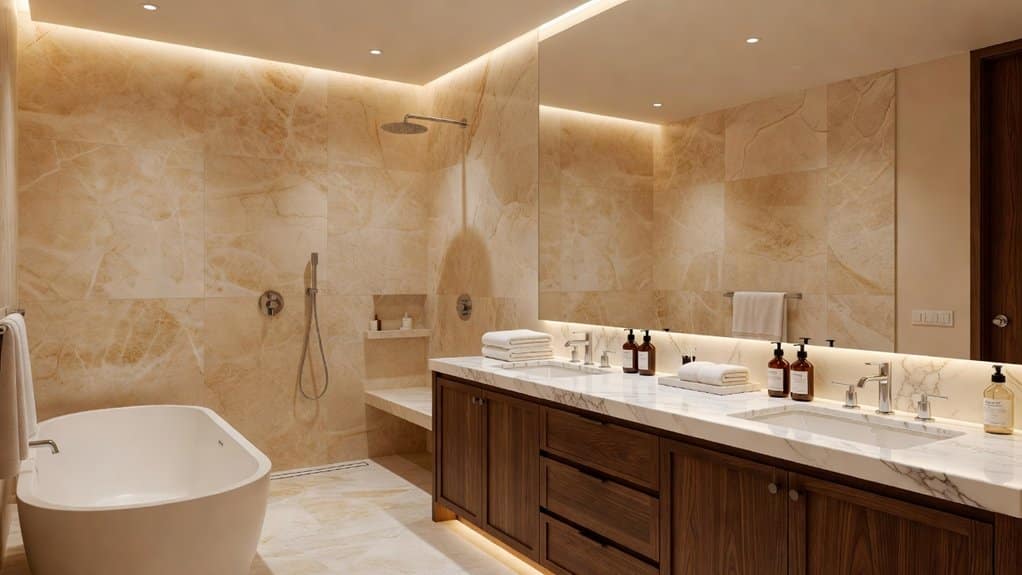
A luxury bathroom should make your daily routine easier, not just look impressive. Start by tracking how you use the room, from getting ready in the morning to winding down at night. Note where you need better lighting, more storage, or clearer counter space. These details help you prioritize upgrades that solve real problems rather than add features you rarely use.
Plan an efficient layout around your habits and the number of people sharing the space. Keep frequently used items within easy reach, and choose storage that prevents clutter without hiding essentials. Apply ergonomic design to counter heights, controls, and pathways so you can move comfortably and safely.
A luxury spa atmosphere can come from thoughtful lighting, warm materials, and quiet ventilation—not excess. Set a realistic budget, then invest first in durable improvements you’ll appreciate every day.
Choose a Shower and Tub That Fit
Once you’ve mapped your daily routines, choose a shower and tub that suit your space and how you like to bathe. Measure carefully, including door swings, clearances, and access to plumbing, before selecting fixtures.
Shower enclosure options range from a compact corner unit to a spacious walk-in with a fixed glass panel. Choose a configuration that contains water, allows comfortable movement, and fits your bathroom’s layout. If privacy matters, consider frosted glass; for easier cleaning, limit seams and hardware.
Bathtub shape choices affect both comfort and floor space. A straight alcove tub works well in many layouts, while a freestanding model needs room around it for access and cleaning. Check the tub’s interior dimensions and depth, then confirm your floor can support its filled weight. Select pieces you’ll use comfortably.
Add Heated Floors for Cozy Mornings
Radiant floor heat keeps your feet warm and distributes comfort evenly across the bathroom.
Smart thermostats let you schedule temperatures around your routine, so you don’t heat the floor when you don’t need it.
Choose energy-efficient flooring that transfers heat effectively and suits your renovation plan.
Radiant Heat Benefits
On chilly mornings, heated bathroom floors deliver steady warmth underfoot, making your first steps more comfortable without relying on a space heater. Radiant heat warms the floor and nearby surfaces, so you feel comfortable without a blast of hot air. You’ll also avoid the drafts and uneven temperatures that portable heaters can create.
For dependable bathroom comfort, plan the system around your flooring and room layout. Electric mats often suit smaller spaces or targeted areas, while hydronic systems can work well in larger renovations with compatible heating infrastructure.
Have a qualified installer assess insulation, electrical capacity, and floor height before work begins. Proper installation helps distribute warmth evenly and protects the system beneath tile or stone.
You’ll gain a practical luxury that makes daily routines more pleasant, especially during colder months, without adding visible equipment.
Smart Temperature Controls
A smart thermostat lets you schedule heated bathroom floors to warm up before you wake, so the tile feels comfortable when you step out of bed. Set a weekday routine that matches your household’s schedule, then create a different program for weekends or travel. You can adjust settings from your phone when plans change, rather than leaving the floor warm all day.
For precise control, ask your installer to configure temperature zones for separate areas, such as the shower and vanity, if your system supports them. A floor sensor helps the thermostat regulate surface temperature and maintain consistent comfort.
Choose controls with clear displays and simple scheduling, so every user can make adjustments confidently. During installation, confirm thermostat placement and sensor compatibility with your flooring and heating system.
Energy-Efficient Flooring
For cozy mornings without heating the whole house, install electric or hydronic floor heating beneath well-insulated bathroom flooring. Electric mats suit smaller rooms and simpler retrofits; hydronic systems can work efficiently when connected to an existing boiler or heat pump.
Ask your contractor to assess insulation, floor height, and electrical capacity before choosing a system. Pair a programmable thermostat with a morning schedule, and lower the setting when you’re away to limit energy use.
Choose tile or stone for their excellent heat transfer, or compare other durable options rated for radiant heating. Eco-friendly materials, such as recycled-content tile, can support sustainable design without compromising comfort.
Proper installation and insulation help warmth reach your feet instead of escaping downward, so you enjoy a comfortable floor with less wasted energy.
Layer Lighting for Daily Bathroom Routines
Layer ambient lighting with focused task lights so you can move safely and see clearly at the mirror.
Choose fixtures that minimize shadows for grooming.
Add dimmers so you can adjust brightness for each routine, from getting ready to winding down.
Ambient and Task Lighting
How should your bathroom lighting support both a relaxing soak and a precise morning routine? Use light layering to give each task the right illumination.
Start with ambient lighting, such as recessed ceiling fixtures or a well-placed central light, to brighten the room evenly and safely.
Then add task lighting at the vanity. Sconces beside the mirror reduce facial shadows, while a vertical light above it can provide balanced coverage.
Choose fixtures with a suitable color temperature: warm white creates a comfortable atmosphere, while neutral white helps you see skin tones accurately during grooming.
For showers and tubs, select damp- or wet-rated fixtures appropriate to their location.
Plan controls and fixture placement around your layout, and avoid relying on a single overhead source.
A thoughtful combination supports comfort and clear visibility throughout your day.
Dimmers for Daily Routines
Once you’ve layered ambient and task lighting, dimmers let you adjust each source to suit the moment. Set bright, even illumination for shaving, applying makeup, or cleaning, then lower the levels for a relaxing bath or a quieter evening routine.
Separate controls for vanity lights, ceiling fixtures, and accent lighting give you precise flexibility without compromising visibility where you need it.
Choose dimmable LED bulbs and compatible switches to avoid flicker, buzzing, or limited dimming range. Check fixture and control specifications before installation, and ask your electrician to confirm compatibility.
A low setting can provide gentle nighttime guidance without fully waking you, while reducing unnecessary light use supports energy savings. With thoughtful control, you can create practical mood lighting that adapts to your schedule and makes the bathroom more comfortable throughout the day.
Build Storage Into Your Bathroom Renovation
A luxury bathroom renovation should make storage feel like part of the design, not an afterthought. Plan storage around your routines and the items you use most. Built-in shelving can keep towels and toiletries within reach while adding a clean architectural detail. Place shelves near the vanity or shower, but choose materials suited to each location.
Use drawer dividers to organize grooming tools, and specify deep drawers for larger products. Hidden compartments can secure valuables or conceal everyday clutter without sacrificing easy access. A recessed medicine cabinet gives you useful capacity while preserving counter space.
Before construction, measure your belongings and confirm that doors and drawers won’t block walkways or fixtures. Thoughtful storage lets you keep essentials close, maintain an uncluttered look, and enjoy a bathroom that works as beautifully as it appears.
Ventilate Your Bathroom to Prevent Moisture
Because hot showers release moisture into the air, plan ventilation as part of your bathroom renovation. Choose exhaust fans sized for your room’s square footage and ceiling height; an undersized unit may not clear humid air effectively.
Look for quiet models with a suitable airflow rating, and place the fan near the shower to capture steam at its source. A timer or humidity sensor can keep the fan running long enough after bathing to support reliable humidity control.
Make sure the duct vents outdoors, not into an attic or wall cavity, where trapped moisture can encourage mold and damage finishes. Ask your contractor to confirm the duct route, insulation, and exterior vent location before work begins.
With proper ventilation, you’ll protect cabinetry, paint, and other surfaces while keeping your bathroom more comfortable.
Save Water With Efficient Bathroom Fixtures
After planning ventilation, choose efficient fixtures to reduce water use without sacrificing comfort. Water conservation starts with products that deliver strong performance while using less water.
Install a WaterSense-labeled showerhead, which can lower flow without making your daily rinse feel weak. For sinks, select efficient faucets or add aerators to existing models; you’ll maintain useful pressure while limiting unnecessary flow.
Consider a dual-flush toilet or a high-efficiency model designed to clear waste effectively with fewer gallons. During fixture upgrades, check product specifications and confirm compatibility with your plumbing before buying.
A qualified plumber can help you avoid pressure problems and leaks that waste water over time. Pair these choices with simple habits, such as turning off the tap while brushing, and you’ll reduce utility costs while creating a comfortable, refined bathroom.
Frequently Asked Questions
Do Luxury Bathroom Renovations Require Permits?
Yes, your luxury bathroom renovation may require permits, depending on your location and the work involved. You’ll usually need approval for changes to plumbing, electrical wiring, ventilation, structural elements, or room layout.
Cosmetic updates often don’t require permits. Check local Building codes and contact your building department before work begins.
The Permit process can involve applications, fees, inspections, and approved plans. Your contractor can help confirm requirements, but you’re responsible for ensuring compliance.
How Long Does a Luxury Bathroom Renovation Usually Take?
A luxury bathroom renovation usually takes four to eight weeks, though complex projects may stretch longer. Think of your bathroom timeline as a carefully choreographed dance: each trade must move in sequence.
You’ll need time for demolition, plumbing and electrical work, waterproofing, tile, cabinetry, fixtures, and inspections.
Your renovation scheduling also depends on material availability, permit approvals, and unexpected repairs. Confirm lead times and build a contingency into your plan before construction begins.
What Is the Typical Cost of a Luxury Bathroom Renovation?
A luxury bathroom renovation typically costs $30,000–$75,000, though extensive redesigns can exceed $100,000. Your final price depends on room size, labor rates, plumbing changes, and finish quality.
For a useful Cost breakdown, budget roughly 40–60% for labor, 20–30% for materials, and the remainder for fixtures, permits, and contingencies.
Your Material selection matters: premium stone, custom cabinetry, and specialty tile raise costs, while carefully chosen alternatives can preserve style and control spending.
Can I Stay in My Home During the Renovation?
Yes, you can usually stay in your home during a bathroom renovation, especially if you have another working bathroom.
Expect renovation disruption from noise, dust, workers, and limited access to the project area.
Ask your contractor to seal off the work zone, protect nearby floors, and set clear work hours.
If you have only one bathroom, discuss a temporary toilet or shower plan; temporary living elsewhere may be more practical during plumbing shutdowns or major demolition.
How Can I Choose a Reliable Bathroom Renovation Contractor?
Choose a contractor with proven bathroom experience, strong references, and clear communication.
Verify Contractor credentials, including licensing, insurance, and any required local certifications.
Ask for recent project photos and contact past clients about workmanship, timelines, and problem-solving.
Compare detailed written bids rather than choosing solely by price.
Confirm who’ll manage the job, how changes are approved, and what renovation warranties cover.
Get every commitment, payment schedule, and start date in writing before signing the contract.
Leave a Reply