

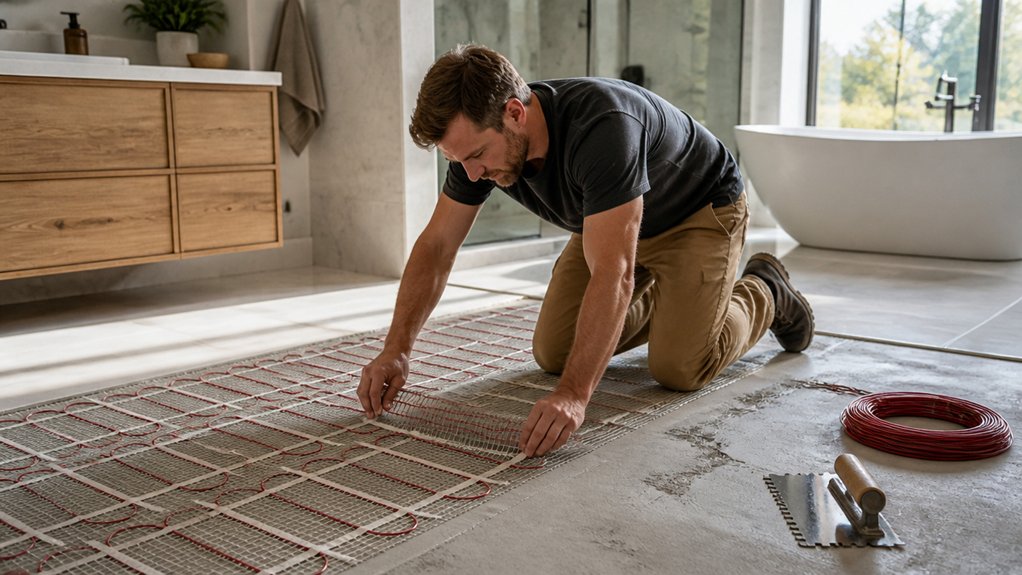
If you want a warmer home without a major renovation, electric underfloor heating is a practical weekend upgrade. You can install it beneath many common floor finishes, reclaim wall space by removing radiators, and control heat room by room with a thermostat. The work is often quick, but the right system, floor preparation, and running costs depend on your room and flooring—so it pays to check a few details before you begin.
What Is Electric Underfloor Heating?

Electric underfloor heating warms a room from beneath the floor using electric cables or heating mats installed under the finished surface. You control the system with a thermostat, which switches the heating on and off to maintain your chosen temperature.
Depending on the product, you can place heating elements in tile adhesive, leveling compound, or a suitable underlay beneath compatible flooring.
Historical context helps explain the system’s appeal: radiant floor heating has ancient roots, while modern electric versions make installation practical in many homes. Technological advancements have brought thinner mats, programmable thermostats, and sensors that help regulate floor temperature.
Before you install a system, check that your floor construction and covering suit the product. You’ll also need a qualified electrician to connect and test the circuit, particularly in bathrooms or other wet areas.
Why Choose Electric Underfloor Heating?
You can install many electric underfloor heating systems in a weekend, with minimal disruption. They keep radiators off your walls, giving you more space and an uncluttered look.
You can also heat rooms individually, so you’re not warming spaces you don’t use.
Fast Weekend Installation
Because electric underfloor heating installs without the pipework and boiler changes often required by water-based systems, you can typically fit it in a weekend—especially in a small room with a clear subfloor and a compatible floor finish.
Start by checking the manufacturer’s instructions, floor construction, and electrical supply. Remove the existing flooring, prepare a smooth, dry surface, then lay the heating mat or cable according to the plan.
A qualified electrician must connect the system and test it before you cover it. Allow time for any levelling compound or adhesive to cure; rushing this step can damage the installation.
Larger rooms, awkward layouts, or extra installation challenges may extend the schedule. Confirm maintenance requirements and warranty conditions before choosing a kit.
With materials ready and tasks planned, you can keep disruption brief and finish efficiently.
Comfort Without Clutter
Once the system’s installed, electric underfloor heating can keep your room warm without taking up wall or floor space. You won’t need bulky radiators, so you can arrange furniture freely and make better use of compact rooms.
That flexibility supports interior design choices, from clean, minimalist walls to practical layouts that suit your household. The heating elements sit beneath your finished floor, leaving the surface clear and comfortable underfoot.
You’ll also avoid the dust and uneven warmth that can come with some conventional heating setups. With a properly selected thermostat and suitable insulation, you can control operation efficiently and support energy savings.
Check your floor covering’s compatibility and follow the manufacturer’s guidance to protect performance. The result is discreet warmth that preserves your room’s look and usable space.
Efficient Room-by-Room Heating
With electric underfloor heating, you can set different schedules and temperatures for individual rooms, warming only the spaces you use. This zoning helps you avoid heating empty bedrooms while keeping your kitchen comfortable during busy mornings.
Pair the system with smart thermostats to adjust settings remotely, create routines, and respond to changes in your household’s schedule. You can lower temperatures when you leave and warm rooms shortly before you return, rather than running heat throughout the home all day.
Because electric systems respond quickly, you can make targeted adjustments without waiting long for floors to warm. Your actual energy savings will depend on insulation, electricity rates, and how you operate the system, so set sensible temperatures and schedules.
Room-by-room control gives you practical comfort and helps limit unnecessary energy use.
Which Rooms Suit Electric Underfloor Heating?
Which rooms benefit most from electric underfloor heating? Bathrooms are a natural fit: warm tiles make chilly mornings more comfortable, and the system leaves walls free for storage.
In kitchens, you can enjoy steady warmth underfoot without adding a bulky radiator that competes for space.
You’ll also find it suits bedrooms, home offices, and living rooms, especially where you want consistent comfort and a clean, uncluttered look.
In smaller rooms, freeing wall space can make furniture placement easier.
In open-plan areas, heating can support a cohesive feel across connected zones, provided the floor finish and layout allow it.
Consider how each room functions and how its flooring contributes to comfort.
Color coordination and interior design matter, too: an unobtrusive heating system lets your chosen finishes and furnishings take center stage.
How to Choose the Right Heating System
To choose the right electric underfloor heating system, start with your room’s size, insulation, and floor finish. Calculate the heated area, excluding fixed units, and check the manufacturer’s output recommendations.
A well-insulated room may need less power; poor insulation can increase warm-up time and running costs.
Match the system’s wattage to your room’s heat loss, and confirm your electrical supply can support it.
Consider how you’ll control the heat: a Smart thermostat can schedule temperatures, reduce energy use, and help maintain comfort.
If you’re heating several rooms, look for zoning options so you can set each area independently.
Check the system’s warranty, installation requirements, and compatibility with your existing controls.
Choose a kit sized for your project, with clear instructions and support, rather than paying for unnecessary capacity.
Which Floors Work With Electric Underfloor Heating?
Electric underfloor heating works particularly well beneath tile and stone, which transfer heat efficiently.
You can also use it with wood or vinyl, provided the flooring is rated for underfloor heating.
Check the manufacturer’s temperature limits and installation guidance before choosing your floor.
Tile and Stone Floors
Tile and stone are among the best flooring choices for electric underfloor heating because they conduct heat efficiently and retain it well. Porcelain, ceramic, slate, and limestone can all work, provided you choose products rated for heated floors. Their thermal mass helps deliver steady warmth, while a compatible electric mat or cable system heats them evenly.
Before installation, check the flooring and heating manufacturers’ specifications, including limits on temperature and substrate preparation. Use flexible tile adhesive and grout designed for underfloor heating to accommodate slight movement and reduce cracking risk. A qualified installer can confirm the floor build-up suits your room and system.
Good tile maintenance keeps grout clean and surfaces in sound condition. For porous natural stone, stone sealing helps limit staining and moisture absorption. Follow product guidance, and raise the thermostat gradually after installation.
Wood and Vinyl Floors
Wood and vinyl can work with electric underfloor heating, but you’ll need flooring specifically approved for heated floors. Check the manufacturer’s guidance before buying, since some products can warp, shrink, or release harmful emissions when exposed to heat.
Engineered wood flooring is generally more stable than solid wood because its layered construction resists movement as temperatures change. Choose a product rated for underfloor heating, and follow its limits for surface temperature and installation. Keep the heating gradual to help protect the boards.
Vinyl flooring also suits heated floors when the manufacturer confirms compatibility. Select a product with a suitable temperature rating, and use an approved underlay or adhesive if required. Avoid thick coverings that restrict heat transfer.
For either material, a thermostat with a floor sensor helps you maintain safe temperatures and comfortable, even warmth.
Can You Install It in a Weekend?
You can install electric underfloor heating in a weekend if the room is small, the subfloor is ready, and you’re comfortable with the work. A straightforward mat system can fit a tight installation timeline, especially when you’ve removed the old flooring and confirmed the surface is clean, dry, and level beforehand.
Plan each stage before you begin. Lay out the heating mat without cutting its cable, check clearances, and follow the manufacturer’s instructions for the sensor and thermostat.
You’ll also need an electrician to make or verify electrical connections where local rules require it. Test the system before covering it, then install compatible flooring and allow adhesives or leveling compounds to cure fully.
A larger room, complicated layout, or unprepared subfloor can extend the job. Don’t rush curing or testing for energy savings; safe, correct installation comes first.
What Does Electric Underfloor Heating Cost to Run?
Electric underfloor heating costs depend on your electricity rate, the system’s wattage, and how long you run it. To estimate your cost, multiply the system’s kilowatts by operating hours and your price per kilowatt-hour.
For example, a 1-kilowatt mat running for three hours uses 3 kilowatt-hours; at 30 cents per kilowatt-hour, that’s 90 cents.
Your actual bill depends on room size, insulation, thermostat settings, and heat-up time. A programmable thermostat helps you avoid heating an empty room, while good insulation reduces heat loss.
For better energy efficiency, warm only the areas you use and set schedules around your routine.
For a useful Cost comparison, assess your current heating’s running costs alongside installation expenses. Electric underfloor heating can cost more per unit of heat than gas, but zoning and targeted use may limit consumption.
Check your local electricity tariff before deciding.
Frequently Asked Questions
Do I Need a Qualified Electrician to Connect Electric Underfloor Heating?
Yes, you’ll generally need a qualified electrician to connect electric underfloor heating to the mains—this isn’t a tiny finishing touch; it’s the essential, high-stakes step that keeps your warm floor safe.
Safety regulations and local rules may require a licensed professional, especially for bathroom installations.
You can handle some preparation, but follow the manufacturer’s Installation tips, protect heating cables, and have an electrician test the system before you cover it or switch it on.
Can I Install Electric Underfloor Heating Beneath Existing Tiles?
Yes, you can install electric underfloor heating beneath existing tiles, but only with a compatible overlay system designed for tiled floors.
Check that your floor can support the added height and weight, and confirm the tiles are firmly bonded, level, and undamaged.
Thorough floor preparation is essential for safe, even heating. If the tiles are loose or uneven, tile removal may be necessary.
Have a qualified electrician connect and test the system before you use it.
How Long Should I Wait Before Tiling Over a Heating System?
Wait until your heating system’s bedding or levelling compound has fully cured before tiling—usually 24–48 hours, but follow the product manufacturer’s instructions.
Think of the compound as a bridge: tiles should cross only when it’s strong enough.
Check that cables are secure and covered, and preserve any Thermal insulation beneath the system.
After tiling, let the adhesive and grout cure fully before switching on the heat gradually; rushing can damage tiles and reduce Heating efficiency.
What Maintenance Does Electric Underfloor Heating Require?
Electric underfloor heating needs little routine maintenance. Keep your thermostat settings accurate with occasional Thermostat calibration, following the manufacturer’s instructions.
Check that the floor sensor and controls respond correctly, and avoid drilling or nailing into heated areas.
If heating becomes uneven or stops working, try basic system troubleshooting: inspect settings and circuit breakers, then contact a qualified electrician if the fault persists.
Don’t open or repair electrical components yourself; schedule professional checks when the manufacturer recommends them.
Can Electric Underfloor Heating Be Controlled Remotely?
Yes, you can control electric underfloor heating remotely with a compatible smart thermostat and internet connection.
Remote control lets you adjust temperatures, change schedules, or switch zones on and off when you’re away.
Smartphone integration usually works through a manufacturer’s app, so you can manage settings from your phone.
Check that your thermostat supports remote access and your Wi-Fi reaches it reliably.
You can also set schedules to balance comfort and energy use.
Leave a Reply