

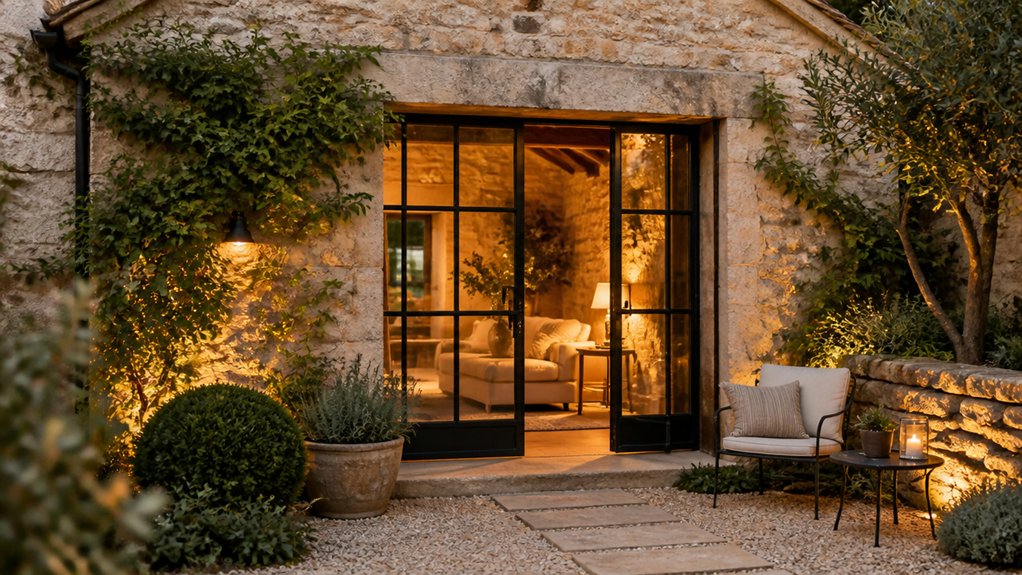
A neglected stone outbuilding can seem beyond repair, with damp walls, failing stonework, and rooms too dark to welcome a guest. Yet you don’t need to erase its history to make it feel luxurious. By evaluating the structure, setting clear priorities, and choosing compatible materials, you can preserve its character while improving comfort and function. The most important decisions often come before the first finish goes in.
Assess the Stone Outbuilding’s Biggest Problems
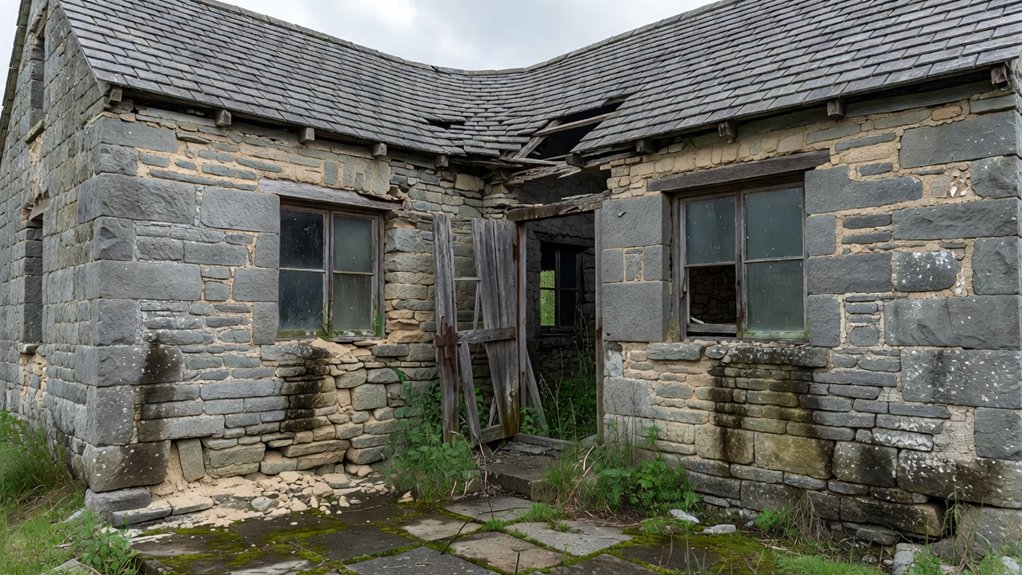
Before planning the renovation, we assessed the outbuilding’s condition rather than assuming its stone walls were sound. You should begin with a systematic inspection, checking for bulging masonry, open joints, damp patches, and movement around openings. These signs can reveal whether water ingress, failed drainage, or structural stress threatens the building.
We also examined the roof, timber lintels, floor levels, and ventilation, since hidden decay can undermine otherwise sturdy stonework. A qualified surveyor can distinguish cosmetic defects from problems requiring specialist attention.
You’ll protect Historical preservation by recording original features and identifying fragile stone before any work begins. Outside, inspect ground levels, vegetation, and runoff; roots and trapped moisture can accelerate deterioration.
Landscaping enhancements should respect the building’s setting while improving drainage and access. Document each defect with photographs and measurements, so later decisions reflect the outbuilding’s actual condition.
Set the Renovation Scope, Budget, and Priorities
Once the survey establishes what the outbuilding needs, define the renovation scope around safety, building performance, and the standard your holiday let must meet. Separate essential work from upgrades that can wait, then price each item using professional estimates rather than optimistic guesses. Include design fees, permissions, utilities, furnishings, and a contingency of at least 10–15 percent; older buildings often conceal costly complications.
Check Local regulations early, including planning, building-control, fire-safety, and accessibility requirements, so your budget reflects compliance from the outset. Consider Historical significance when choosing materials and interventions: preserving character may shape specifications, approvals, and costs.
Prioritise spending that protects the building, supports reliable operation, and improves guest comfort. Compare projected costs with realistic nightly rates and occupancy, then adjust the scope before commitments make changes expensive.
Keep a written budget and review it regularly.
Fix the Roof, Stonework, and Damp
Prioritise the roof, stonework, and damp control before investing in finishes, because moisture can quickly damage both the building and your budget. Start with a thorough inspection: check for slipped slates, failing flashings, blocked gutters, and cracks in the masonry.
Repair the roof first, using compatible materials and sound detailing to keep water out without trapping moisture.
For the stonework, repoint only where necessary with lime mortar rather than hard cement, which can force damp into historic walls. This approach supports historical preservation while allowing the building to breathe.
Trace damp to its source—often leaks, poor drainage, or ground levels—and correct the cause instead of masking symptoms with sealants. Choose eco-friendly materials that suit the original construction, and let walls dry fully before finishing.
Your repairs will protect the structure and reduce costly repeat work.
Add Light and Warmth to Dark Rooms
With the roof watertight and the stonework drying, you can focus on bringing light and warmth into the rooms. First, assess where daylight enters and how deep it reaches; thick walls and small windows can leave corners gloomy. Keep window treatments light, and use reflective finishes selectively to spread available light without stripping away the building’s character.
Plan interior lighting in layers. Combine ceiling fixtures for general illumination with wall lights and task lamps, then choose warm-white bulbs to soften the stone’s cool tones. Dimmers let you adjust brightness for different times of day and activities.
For ambient warmth, improve insulation and seal draughts before relying on heating. A well-sized, efficient heater can then maintain an even temperature, helping guests feel comfortable while protecting the building from unnecessary energy use.
Plan a Comfortable Holiday Let Layout
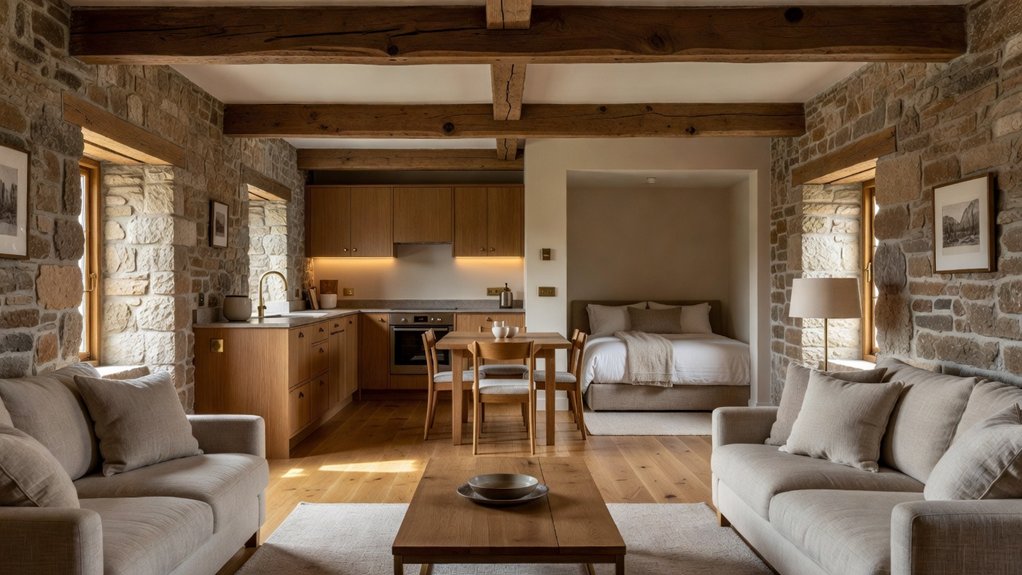
How guests move through the outbuilding matters as much as how it looks. Start by mapping the route from the entrance to sleeping, cooking and bathing areas. Keep circulation clear, especially where stone walls or low ceilings narrow the space. Place frequently used facilities within easy reach, and avoid making guests cross a bedroom to reach the bathroom.
Next, assign each room a clear purpose. A compact dining area can double as a workspace, but protect enough room to pull out chairs and open doors. Choose furniture to suit the footprint, not simply to fill it. Interior decor should support these practical decisions, while outdoor landscaping can extend living space with a private seating area.
Check sightlines, storage and lighting from a guest’s perspective; small layout choices shape comfort throughout the stay.
Choose Characterful, High-Quality Finishes
Once the layout works, choose finishes that give the outbuilding character without compromising durability. Let the stone walls lead your palette: warm neutrals, muted greens, and natural timber complement their texture without competing for attention. Use limewash or breathable paint where appropriate, and select flooring that can handle frequent turnover while still feeling inviting.
Vintage fixtures can add history and individuality, but inspect their condition and pair them with reliable modern fittings where needed. Build Eclectic decor around a restrained scheme, mixing a few distinctive pieces with simple, well-made furniture. This balance keeps the rooms memorable rather than cluttered.
Compare samples in the actual light, and check how finishes meet at edges and juxtaposition. Thoughtful material choices make the conversion feel authentic, polished, and coherent, not newly assembled.
Check Safety, Comfort, and Guest Essentials
Finishes set the mood, but safety and comfort determine whether guests can relax in the space. Before welcoming visitors, you should have a qualified professional inspect wiring, heating, ventilation, and any structural repairs. Fit smoke and carbon monoxide alarms, provide clear escape instructions, and check that stairs, floors, and outdoor paths are secure and well lit.
Next, assess comfort through a guest’s eyes. Test hot water, heating controls, mattress support, window coverings, and reliable internet. Stock the kitchen with essential cookware, crockery, and cleaning supplies; leave concise instructions for appliances and waste disposal. You’ll reduce avoidable questions while helping guests feel at ease.
Finally, keep decorative accents practical, not obstructive, and maintain outdoor landscaping so entrances remain accessible. Thoughtful essentials and routine checks protect your investment and support consistently positive stays.
Frequently Asked Questions
What Permissions Are Needed to Convert a Stone Outbuilding Into a Holiday Let?
Your stone outbuilding may look ready to welcome guests, but even sturdy walls can’t check their own paperwork. You’ll usually need Planning permissions if converting it changes the building’s use, appearance, access, or parking; check with your local planning authority before work begins.
Building regulations apply to structural safety, insulation, ventilation, fire precautions, drainage, and energy efficiency.
If the structure’s listed or in a conservation area, you may need additional consent. Verify requirements locally.
How Can You Market a Renovated Holiday Let to Attract Guests?
Market your renovated holiday let by defining the guests you want to attract, then highlighting what makes their stay distinctive. Use professional photography to showcase the property, its setting, and thoughtful details.
Build a clear website with direct booking, accurate availability, and compelling descriptions.
Invest in targeted Online advertising and maintain active listings on relevant booking platforms.
Strengthen your Guest experience with responsive communication, local recommendations, and consistent quality.
Then encourage satisfied guests to leave reviews and share referrals.
What Insurance Does a Holiday Let Owner Need?
You’ll generally need specialist holiday-let insurance, not standard home cover. Choose insurance coverage that protects your building, contents, accidental damage, loss of rental income, and alternative accommodation if an insured event makes the property unusable.
Include liability protection for guest injuries or damage claims, and consider employers’ liability if you hire staff. Check policy limits, exclusions, security requirements, and permitted occupancy.
Disclose short-term letting accurately, and confirm your lender’s and local regulations’ requirements.
How Should You Set Nightly Rates for a Holiday Rental?
Set your nightly rate by comparing similar rentals in your area, then adjust for your property’s size, amenities, location, and reviews.
Use pricing strategies that balance occupancy with revenue: track booking pace, local events, and competitor rates, and test modest changes.
Apply seasonal adjustments for peak demand, quieter months, holidays, and school breaks.
Include cleaning fees and platform charges in your calculations, and review performance regularly so you can refine rates without undervaluing your rental.
What Ongoing Maintenance Does a Holiday Let Require?
A dripping tap, overgrown path, and scuffed sofa can turn a guest’s first impression sour. You’ll need to inspect your holiday let regularly, fix plumbing and electrical faults, service heating, test alarms, and check roofs, windows, and appliances.
Schedule deep cleaning between stays, refresh linens, and maintain gardens. Landscaping upgrades may mean pruning, drainage work, or safer paths; interior decor needs periodic repairs and updates.
Keep a maintenance log and budget for urgent repairs and planned replacements.
Leave a Reply