

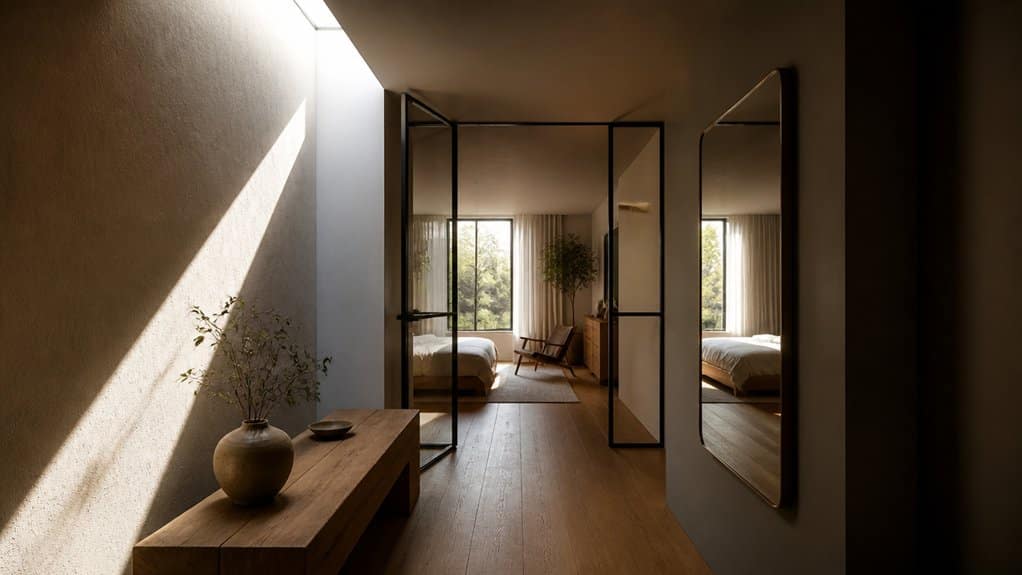
A dark room doesn’t always need a larger window to feel brighter. You can often make better use of the daylight you already have by clearing obstructions, choosing light-friendly finishes, and guiding light into shadowed areas. When those changes aren’t enough, interior openings or new glazing can bring daylight deeper into your home. Start by finding what’s blocking the light—and where it could travel next.
Find What’s Blocking the Daylight

Start by tracing where daylight enters and where it gets lost. Observe each room at different times, noting which areas stay dim and how sunlight moves across the floor. Check for exterior obstructions, such as trees, neighboring buildings, or deep overhangs, that shade your windows.
Inside, look for anything that interrupts the light’s path. Tall shelves, bulky cabinets, and obstructive furniture can cast shadows or block daylight from reaching the room’s center. Heavy curtains may also cover part of a window, while cluttered sills reduce the usable opening.
Assess wall colors and finishes, too: dark surfaces absorb light rather than reflect it. Identify the biggest barriers before making changes, then address them one at a time.
This simple audit helps you target the causes of dimness instead of guessing at solutions.
Choose Window Treatments That Let Light In
Choose window treatments that provide privacy without blocking more daylight than necessary. Sheer curtains soften direct sun while allowing a generous amount of light to reach your room. Hang them on a rod that extends beyond the window frame, so you can pull the fabric clear of the glass when you want maximum daylight.
For privacy without fabric, consider window film. Frosted or patterned film obscures views while still admitting light; apply it to the lower sash and leave the upper glass uncovered when you want a balance of privacy and brightness. Check the product’s light-transmission rating before buying, since darker films can reduce daylight.
Avoid heavy, layered drapes in rooms that already feel dim. If you need flexible control, pair a simple shade with sheer curtains, and raise or draw each treatment as conditions change.
Brighten a Dark Room With Light Colors
Choose pale wall colors to make your room feel brighter and more open.
Paint alone won’t maximize daylight, so select finishes that reflect light, such as satin or eggshell.
Use glossier finishes selectively to avoid unwanted glare.
Choose Pale Wall Colors
Pale walls can make a dark room feel brighter by reflecting more of the natural light that reaches it. Choose a shade that suits the room’s orientation and existing furnishings.
Soft pastel shades, such as muted blue or green, can add gentle color without making the space feel enclosed. Warm neutral tones, including cream, ivory, and pale beige, can create a welcoming backdrop and balance cool daylight.
Before committing, paint sample patches on several walls and observe them at different times of day; changing light can shift a color’s appearance.
Consider the ceiling, too: a pale, coordinated shade can help the room feel more open. Keep trim and adjacent rooms in mind so your palette feels cohesive.
If you have dark furniture, lighter walls can provide contrast without requiring a full redesign.
Reflect Light With Finishes
Once you’ve settled on wall colors, use reflective finishes to help daylight travel farther through the room. Choose satin or semi-gloss paint for trim, doors, and ceilings; these finishes bounce more light than flat paint without creating harsh glare.
A glossy ceiling can lift a low, dim space, while a polished floor or pale tile helps distribute brightness at eye level.
Use mirrors strategically across from windows, but angle them to reflect a view or daylight rather than clutter.
For furniture, favor light-toned, smooth surfaces, and balance them with natural materials such as pale wood or linen to keep the room welcoming.
Keep window glass clean, and avoid heavy, dark window treatments.
Indoor plants add life; place them where they won’t block sunlight or cast unwanted shadows.
Use Reflective Finishes to Spread Daylight
Reflective finishes can carry daylight beyond the window, brightening corners that direct sun never reaches. Choose materials that bounce light without creating glare. Satin paint, glazed tile, polished stone, and lacquered cabinetry offer controlled reflection, while a metallic sheen on hardware or trim adds a subtle lift.
You don’t need to coat every surface; use these finishes where daylight already lands, such as a wall opposite a window or a pale countertop beneath it.
Consider texture and color, too. A smooth natural surface reflects more evenly than a rough, matte one, and lighter tones generally return more light into the room. Test samples at different times of day, since a finish can look bright in morning sun but dull in shade.
Balance reflective areas with softer textures to keep the space comfortable and avoid harsh, scattered highlights.
Place Mirrors to Carry Light Farther
A well-placed mirror can redirect daylight into areas the window can’t reach. To improve mirror placement, first observe where sunlight enters and how it moves across the room.
Position a mirror opposite or beside a window so it catches direct daylight, then angle it toward a dim wall or corner. You’ll get the best results when the reflection lands on a useful surface rather than pointing into someone’s eyes.
Choose a mirror large enough to reflect a meaningful patch of light, but keep its frame and surroundings simple. Several smaller mirrors can also support light dispersion when you arrange them to bounce light along a darker area.
Check the effect at different times of day; sunlight shifts, and a placement that works in the morning may create glare later. Adjust the angle or location to maintain comfortable brightness.
Open Sightlines to Share Daylight
Open sightlines let daylight reach rooms beyond the windows. Remove visual barriers, such as bulky furniture or unnecessary partitions, to keep light moving.
Align doorways and interior openings so sunlight can travel farther into your home.
Remove Visual Barriers
When walls or bulky furniture block a window, daylight can’t travel far into your home. Remove or reposition obstacles so sunlight can reach deeper rooms. You might replace a solid divider with translucent partitions, which preserve privacy while allowing light to pass through.
Keep furniture low near windows and along key sightlines; a tall bookcase or sofa can cast a broad shadow. Choose open shelving instead of closed cabinets where storage needs allow, and avoid crowding window areas with decor.
Indoor plants can soften a room, but place them where their foliage won’t obstruct the brightest openings. Before making changes, observe how light moves through your home at different times of day.
Then prioritize the barriers that block the most daylight, balancing openness with practical needs for privacy, storage, and comfort.
Align Interior Openings
Align doorways, interior windows, and other openings so daylight can pass from brighter rooms into darker ones. When planning a renovation, position openings along a clear sightline between a window and the areas that need more light. Even a modest interior window can brighten a hallway or central room without sacrificing privacy; use translucent glass where you want light but limited visibility.
Check furniture placement before finalizing the layout. Tall bookcases, cabinets, and screens can block the path of daylight, so keep them away from key openings or choose lower pieces. You can also use architectural accents, such as glazed doors or transoms, to extend light above eye level.
If structural walls limit changes, consult a qualified professional before cutting new openings. Thoughtful alignment helps daylight reach deeper into your home.
Add Skylights or Glazed Doors for More Daylight
If side windows can’t brighten a dark room, skylights or glazed doors can bring daylight in from above or from adjoining spaces. Before skylight installation, check roof structure, orientation, and local requirements; a south-facing unit may admit strong sun, while north-facing glazing usually provides steadier light.
Choose insulated, low-emissivity glazing to limit heat loss and overheating, and specify flashing that suits your roof. A tubular skylight can work where a full unit won’t fit.
For borrowed light, glazed door design can connect a dim hallway or interior room to a brighter space. Use clear glass where privacy allows, or choose reeded or translucent panels to soften views without blocking much daylight.
Confirm door swings, safety-glass needs, and sightlines before ordering. Thoughtful placement helps light reach deeper into your home.
Frequently Asked Questions
Can Indoor Plants Thrive in Rooms With Very Little Natural Light?
Yes, you can grow some indoor plants in rooms with very little natural light, but they still need light to thrive. Choose tolerant varieties such as snake plants, ZZ plants, or pothos, and place them near the brightest available spot.
For successful low light gardening, water sparingly because soil dries slowly in dim rooms.
Good indoor plant care also means checking leaves for stress and using a grow light if plants become weak or leggy.
How Can I Estimate the Ideal Daylight Levels for Different Rooms?
Estimate ideal daylight by measuring illuminance in lux at desk height during typical daytime conditions.
500 lux suits reading and detailed tasks, while 100–300 lux often works for relaxing spaces.
Use a light meter app for a rough reading, then compare results across morning, noon, and afternoon.
Consider window placement, room orientation, and light diffusion from curtains or nearby surfaces.
You’ll get a clearer target by matching measurements to each room’s activities.
Do Daylight Lamps Help Compensate for Limited Natural Sunlight?
Yes, daylight lamps can help when you don’t get enough natural sunlight, but they can’t fully replace its changing qualities.
Choose Artificial lighting with a color temperature and brightness suited to your task; use brighter, cooler light for focused work and warmer light for relaxing.
Plan Light distribution to reduce glare and dark corners, combining ceiling fixtures with task lamps.
If you’re addressing seasonal mood symptoms, ask a healthcare professional about a properly rated light therapy lamp.
How Can I Reduce Glare and Overheating While Maximizing Daylight?
You can reduce glare and overheating while preserving daylight by controlling direct sun rather than covering windows completely. Choose adjustable Window treatments, such as light-filtering shades or blinds, and raise or tilt them as sunlight shifts.
Add exterior shading solutions, including awnings, shutters, or strategically placed trees, to block heat before it enters.
Use reflective surfaces carefully, since they can intensify glare.
Open shades during cooler hours, and consider low-emissivity glazing to limit heat gain without sacrificing brightness.
Are There Building Regulations for Adding New Windows or Skylights?
Yes—building codes often regulate new windows and skylights, and the rules can shift like weather from one location to another. Check with your local building department before work begins; you may need a permit and inspections.
Window requirements can cover structural support, energy efficiency, safety glazing, ventilation, fire escape access, and placement near property lines.
Ask a licensed contractor or architect to confirm which standards apply to your project and secure approvals before ordering or installing units.
Leave a Reply