

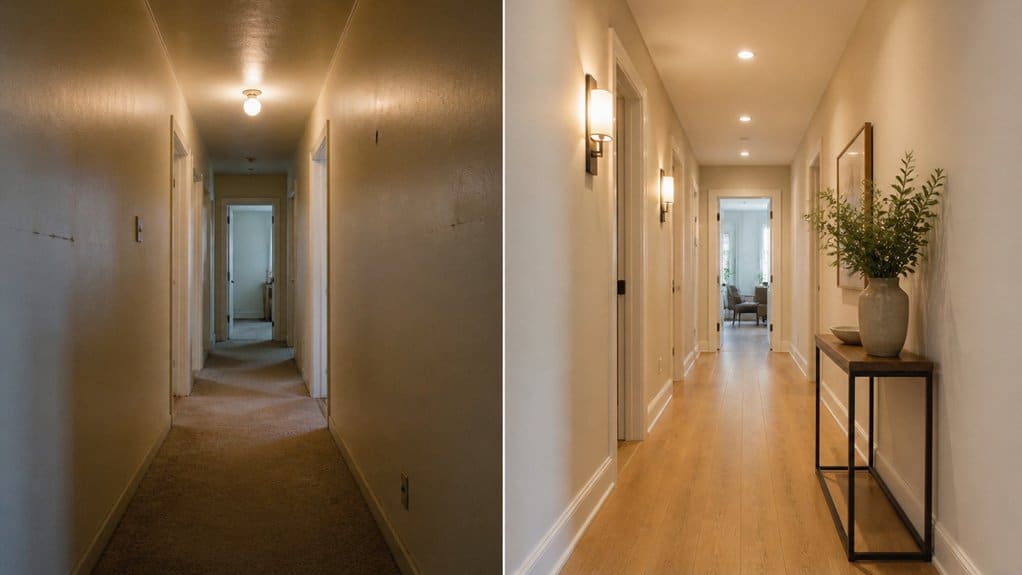
A hallway can feel cramped, dim, and forgettable before renovation, then become bright, organized, and welcoming with a few well-chosen changes. You don’t need a major remodel to make a difference: better lighting, refreshed walls, smart storage, and cohesive flooring can reshape the space. The key is choosing updates that suit your layout and budget—and one small design decision can make the whole transformation feel more dramatic.
Brighten a Dark Hallway With Better Lighting
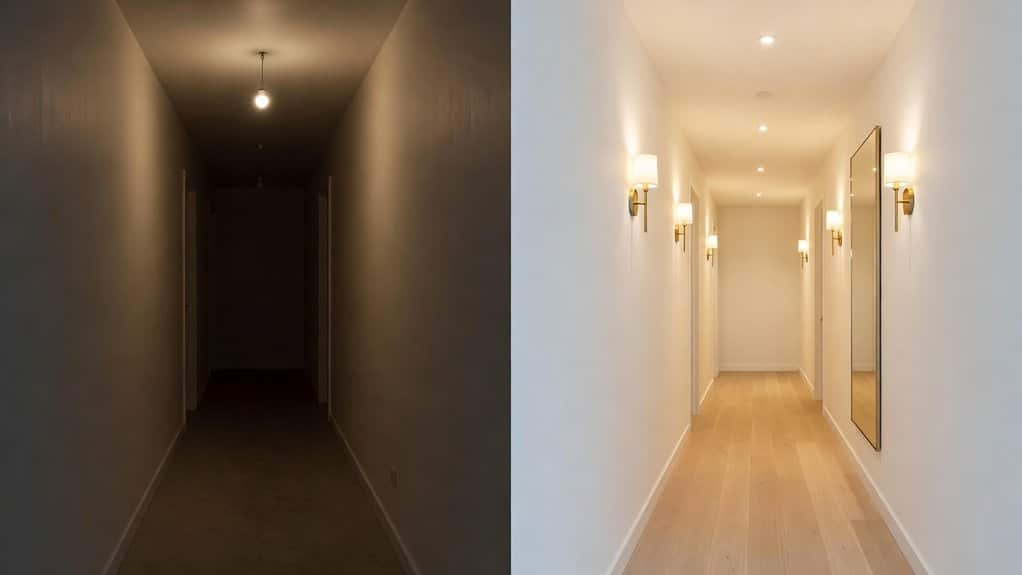
A dark hallway can feel cramped, but the right lighting makes it brighter and more welcoming. Start by maximizing Natural light: keep windows unobstructed, clean the glass, and use a glazed door where privacy allows.
If daylight remains limited, layer ambient, task, and accent lighting so you can see clearly without harsh glare. Choose smart fixtures, such as dimmable ceiling lights or motion-sensing sconces, to adjust brightness and reduce wasted energy.
Place fixtures evenly along the corridor, and direct light toward the ceiling or walls to soften shadows. Check the color temperature before buying bulbs; warm white creates a comfortable feel, while neutral white improves visibility.
Add a mirror to reflect available light, but position it where it won’t cause distracting glare. Test the layout at night and adjust fixture placement as needed.
Refresh Hallway Walls With Paint and Wallpaper
Refresh your hallway with a bold accent wall to create a clear focal point. Patterned wallpaper adds character, while light-reflecting paint can make a narrow or dim space feel brighter.
Choose finishes that suit your hallway’s light and scale.
Bold Accent Walls
Want a hallway makeover with minimal disruption? A bold accent wall can transform the space without changing its layout or replacing finishes. Start by choosing a wall that naturally draws attention, such as the one at the end of a narrow corridor or behind a console.
Test paint samples in morning and evening light; a shade that looks balanced in the store may feel overpowering at home. Strong accent wall ideas include deep green, terracotta, or navy, paired with lighter surrounding walls to preserve brightness.
For confident bold color schemes, repeat the accent hue in small details, such as a frame or runner, rather than adding competing colors.
Prepare the surface carefully, use painter’s tape for crisp edges, and choose a durable, washable finish for high-traffic areas.
Patterned Wallpaper
Patterned wallpaper can give a hallway personality without changing its layout or replacing existing finishes. Choose a design that suits your home’s proportions: small-scale motifs work well in narrow passages, while larger prints can make a broad hall feel more intentional.
Before ordering, measure each wall and check the pattern repeat so you buy enough paper and align the design cleanly around doors and corners.
You can use wallpaper on every wall for a cohesive look or limit it to one section to define an entry. Pair it with painted trim in a coordinating shade, and consider Textile textures for added depth without a busy print.
Decorative borders can frame a panel or mark a shift between patterns. Prepare walls carefully, and follow the manufacturer’s instructions for a durable finish.
Light-Reflecting Paint
When a hallway feels dim, light-reflecting paint can make it appear brighter without changing its layout. Choose a pale shade with a satin or semi-gloss sheen to bounce light around while keeping walls easy to clean.
A glossy finish reflects more light, but it also highlights dents and uneven surfaces, so repair and sand walls before painting. Test samples at different times of day; artificial lighting can shift how a color looks.
Use color contrast strategically: paint trim a clean white or choose a slightly deeper tone for doors to add definition without making the corridor feel narrow. If your hallway connects to darker rooms, carry a light wall color through the entry to create a smoother visual shift.
Finish with a durable, washable formula suited to high-traffic areas.
Add Smart Storage to a Narrow Hallway
A narrow hallway can stay clear and functional with storage that uses vertical space and keeps the walkway unobstructed. Choose slim vertical shelving to organize books, baskets, and everyday essentials without crowding the floor. Secure tall units to the wall, and keep frequently used items within easy reach.
A shallow console with drawers can hold keys and mail, while hidden compartments keep seasonal accessories out of sight. Add hooks at different heights for coats and bags, but limit each person to a few to prevent clutter.
If you have an unused alcove, fit it with custom shelves or a narrow cabinet that follows the wall’s depth. Measure carefully before buying furniture, and leave enough clearance for doors and comfortable passage.
With a defined place for each item, you’ll keep the hallway tidy and easy to navigate.
Transform Your Hallway With Statement Flooring
Statement flooring can turn your hallway into a focal point, and patterned tile adds color and character without taking up space.
Choose a durable, slip-resistant material that can handle daily foot traffic and is easy to maintain.
Before you decide, compare samples in your hallway’s light to see how the pattern and finish look in place.
Patterned Tile Impact
How can you give a plain hallway instant character? Start with patterned tile that draws the eye and sets the tone for your home. Geometric patterns create crisp movement, while vintage motifs add warmth and a sense of history. Choose a design that suits your hallway’s proportions: large-scale prints can open up a narrow space, while smaller repeats bring detail without overwhelming it.
Before you buy, lay out samples and view them in your hallway’s natural and artificial light. Check how the pattern meets doorways, thresholds, and adjoining floors; careful alignment makes the installation look intentional. If the tile is bold, keep nearby walls and accessories restrained so the floor remains the focal point.
For a quieter effect, choose a limited palette and repeat one color elsewhere in your decor. A well-chosen pattern can turn a pass-through into a memorable entrance.
Durable Flooring Choices
Choose hallway flooring for more than its appearance: it must withstand muddy shoes, rolling bags, and daily foot traffic. Porcelain tile resists scratches and moisture, making it a reliable choice for busy entrances. Pick a matte finish with a slip resistant surface to improve traction when floors get wet.
If you prefer warmth, consider engineered wood with a durable factory finish; it handles everyday wear better than many solid-wood options. Luxury vinyl offers another practical solution, combining water resistance with designs that mimic stone or timber.
Let your flooring create a statement through bold pattern, color, or scale, while keeping the rest of the hall simple. Add an area rug with a nonslip backing to catch grit and soften the space.
Check manufacturer care instructions before choosing, so your floor stays attractive with routine cleaning.
Make Your Hallway Welcoming With Mirrors and Decor
A well-placed mirror can brighten a hallway, make it feel more spacious, and give you a last chance to check your appearance before heading out. Choose a frame that suits your home’s style, then hang the mirror securely at a comfortable viewing height. Position it to reflect a window or attractive feature, not clutter or a busy doorway.
If your hallway lacks natural light, pair the mirror with warm artificial lighting. A wall sconce near the mirror can provide useful illumination without creating harsh glare.
Add a few decorative accents, such as framed artwork, a narrow console, or a small vase, to make the space feel personal and inviting. Keep displays edited and surfaces clear so you can move through comfortably.
Before drilling, check for wiring and use fixings suited to your wall.
Make a Small Hallway Feel More Spacious
Even a narrow hallway can feel more open with a few smart design choices. Start by clearing the floor: remove unnecessary furniture, keep shoes in a slim cabinet, and leave a direct path through the space.
Choose pale wall colors and continue them onto the ceiling to reduce visual breaks. Consistent flooring can also make the corridor seem longer.
Use hallway width illusions strategically. Lay a runner lengthwise to draw the eye forward, or add horizontal stripes to suggest greater width. Recessed lighting and compact wall fixtures keep projections to a minimum while brightening dim corners.
If you need storage, install shallow shelves or hooks rather than bulky units. These narrow space solutions preserve circulation and make everyday items easier to reach.
Keep the palette and finishes simple, and your hallway will feel calmer, brighter, and more spacious.
Plan a Budget-Friendly Hallway Renovation
Set a clear budget before work begins, and spend it where the hallway will benefit most. Assess the floor, walls, lighting, and storage, then prioritize repairs and upgrades that improve safety and daily use. Keep a contingency fund for hidden damage, such as loose boards or faulty wiring, so surprises don’t derail your plan.
Choose affordable materials that withstand frequent traffic. Durable paint, simple trim, and ready-made hooks can refresh the space without costly custom work. Compare prices, check product specifications, and calculate quantities before buying to avoid waste.
Use DIY techniques for manageable tasks, including painting, installing shelves, or replacing cabinet hardware. Rent tools rather than purchasing equipment you’ll rarely use. Hire qualified professionals for electrical work, structural repairs, or jobs requiring permits.
Track every expense as you go, and adjust optional finishes before exceeding your limit.
Frequently Asked Questions
How Long Does a Typical Hallway Renovation Take?
A typical hallway renovation takes three days to two weeks, depending on its scope. Like a short journey, a simple refresh moves quickly, while structural repairs add distance.
You can finish painting, new flooring, and lighting upgrades in several days if materials are ready and the space needs little repair. Changing color schemes or replacing doors may extend the schedule.
Ask your contractor for a written timeline, and allow extra time for delays or drying.
Do I Need a Permit to Renovate My Hallway?
You may need a permit, depending on your location and the work involved. Cosmetic updates, such as painting or replacing flooring, usually don’t require one.
Structural changes, moving walls, altering electrical or plumbing systems, or changing fire-safety features often do require a permit.
Check your local renovation regulations before starting, and contact your building department if you’re unsure.
The permitting process can vary, so confirm requirements, fees, and inspection schedules to avoid delays or penalties.
Should I Hire a Contractor or Renovate the Hallway Myself?
Hire a contractor if your hallway renovation involves structural changes, electrical work, or complex permits.
Tackle simple painting, trim, or flooring yourself if you have the skills and time.
Contractor benefits include professional planning, code compliance, and fewer costly mistakes. Still, compare quotes and check references before hiring.
Avoid DIY pitfalls by pricing materials accurately, allowing extra time, and confirming permit requirements.
Choose the approach that fits your budget, abilities, and project’s complexity.
How Can I Protect My Home From Dust During Renovation?
Treat renovation dust like an unwelcome traveler: block its path before it reaches your home’s quiet rooms. Seal doorways and vents near the work area with plastic sheeting, and lay sticky mats at entrances.
For effective Dust mitigation, ask your contractor to use tools with HEPA attachments and clean surfaces daily.
Run portable Air filtration units with HEPA filters, keeping windows open when weather allows.
Protect belongings with covers, and vacuum with a HEPA machine.
What Should I Do Before Starting a Hallway Renovation?
Before starting a hallway renovation, you should set a budget, define your priorities, and measure the space carefully.
Check walls, flooring, lighting, and trim for damage, then decide what needs repair or replacement.
Choose Wall treatments and Decorative lighting that suit your home and hallway dimensions.
Order materials early, confirm contractor schedules, and clear the area.
Protect nearby rooms from dust, and plan safe access through your home while work is underway.
Leave a Reply