

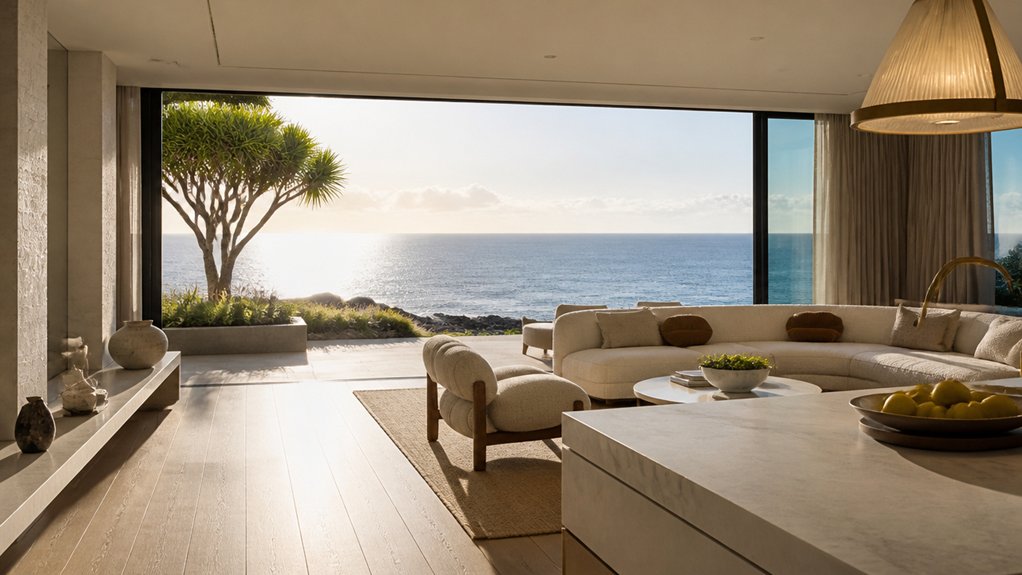
A seafront refurbishment succeeds when you design for the view without letting salt, wind, and moisture dictate every choice. You can preserve a home’s original character while opening its rooms to light, improving indoor-outdoor flow, and introducing durable materials. The challenge is making these practical decisions feel cohesive rather than purely functional. A closer look at the planning, finishes, and defining changes reveals how to get that balance right.
Reimagine the Seafront Home Around Its Setting

A successful seafront refurbishment starts with the setting, not a standard design brief. Study how your home meets the shoreline, where you enter, and which views matter most. Then shape rooms and circulation around those observations.
Position living spaces to frame the sea, while preserving privacy where neighbouring properties overlook your windows. Choose a restrained palette that complements the landscape rather than competing with it.
Natural textures and considered seaside landscaping can connect interiors with the garden and coast, creating a coherent *link* between indoors and out. Use nautical decor selectively; a few locally relevant details feel more convincing than a themed scheme.
Your aim isn’t to imitate a seaside cottage, but to make the property respond to its particular location. This approach gives every design decision a clear purpose and strengthens the home’s relationship with its setting.
Plan the Refurbishment for Coastal Conditions
Once the design responds to its setting, plan materials and construction details for the conditions they’ll face. Salt-laden air accelerates corrosion, while wind-driven rain and humidity test every junction. Choose salt resistant materials for fixings, railings, and external fittings; specify suitable protective coatings, and check that components are compatible to prevent premature failure.
Detail roofs, windows, and cladding to shed water reliably, with robust flashings and carefully sealed penetrations. You’ll also need to control moisture inside. Use marine insulation suited to the building’s exposure, and pair it with a continuous air barrier and a ventilation strategy that limits condensation without trapping damp.
Assess existing fabric before work begins, then coordinate specifications with contractors. These choices protect structural integrity, reduce maintenance, and help your refurbishment perform reliably through changing coastal weather.
Open the Layout to Light and Sea Views
To bring daylight and sea views deeper into the home, assess which walls can be opened without compromising the structure. Ask a structural engineer to identify load-bearing sections, then plan carefully positioned openings that connect living areas with the shoreline. Wider sightlines can make rooms feel more spacious, but preserve enough wall space for practical storage and circulation.
Align windows and glazed doors with key views rather than adding glass indiscriminately. Consider orientation, glare, and heat gain, and specify suitable shading to keep interiors comfortable.
If neighbouring properties overlook the home, use carefully placed glazing, screens, or elevated planting to maintain seaside privacy without blocking daylight. Coordinate coastal landscaping with window positions: low planting can frame the horizon, while taller species can screen exposed areas.
Review sightlines from seated and standing positions before finalising the layout.
Balance Modern Style With Warmth
Modern finishes can feel stark in a seafront home unless you balance them with natural texture and warmth. Pair clean-lined furniture with timber, woven fibres, or softly grained stone to introduce contrast without losing a contemporary feel.
Consider material texture as part of the room’s composition: varied surfaces add depth, soften hard edges, and make restrained palettes feel inviting. You can also use colour strategically. Warm neutrals and muted earth tones temper cool whites and greys while keeping interiors bright.
Plan artificial lighting to support that balance, layering ambient, task, and accent sources rather than relying on a single overhead fixture. Choose warm-toned bulbs and shaded fittings to create a comfortable evening atmosphere.
Choose Finishes for Coastal Durability

Because salt, wind, and moisture accelerate wear, choose finishes designed for coastal conditions. Specify corrosion-resistant hardware, marine-grade stainless steel, and protective coatings for exposed metal.
For joinery, select treated timber or engineered materials with sealed edges; these resist swelling and reduce maintenance.
Choose porcelain or natural stone flooring with a slip-resistant surface, especially in areas exposed to damp footwear.
On walls, use washable, breathable paint that tolerates humidity without trapping moisture.
Check product specifications for salt-spray resistance, UV stability, and suitable cleaning methods rather than relying on appearance alone.
Seaside textures can add character through durable woven fabrics, textured ceramics, and matte finishes.
Marine inspired palettes—soft blues, mineral greys, and sandy neutrals—bring a coastal tone while practical, fade-resistant materials help your scheme retain its clarity over time.
Connect Indoor Living With the Coast
Frame coastal views with well-placed windows and doors to make the shoreline a deliberate part of your interior.
Connect living areas to terraces or decks so you can move easily between indoors and out.
Choose consistent materials and clear sightlines to strengthen that shift.
Frame the Coastal Views
A seafront refurbishment should treat the coastline as part of the interior, not merely as a view beyond it. To achieve this, assess each room from its usual seating and standing positions. Your seaside perspective depends on what the architecture reveals, not simply on how much glass you install.
Position windows to capture meaningful coastal features, such as the open water, shoreline, or changing light. Carefully planned horizon framing can make a room feel composed and expansive, while poorly placed glazing may expose distractions or cut across the view.
Align window heads and sills with interior proportions, and consider how frames divide the scene. Where privacy or glare matters, use discreet screening or adjustable shading without obscuring the outlook.
Choose finishes that complement the sea’s changing tones, keeping attention on the coast rather than competing visual details.
Blend Indoor and Outdoor Living
Connect indoor and outdoor living by treating terraces, balconies, and gardens as extensions of the rooms they serve. Align doors, floor levels, and materials so movement feels natural and the interior retains visual continuity when openings stand wide. Choose sliding or folding glazing to control exposure to wind while preserving coastal views and daylight.
Plan each exterior zone around its use. A dining terrace can support outdoor entertainment, while a sheltered seating area offers a quieter retreat. Use planting, screens, or carefully positioned walls to provide seaside privacy without blocking breezes or making the space feel enclosed.
Select durable, low-maintenance finishes suited to salt air and moisture, and provide shade where sun exposure demands it. With these choices, you’ll create a practical progression that extends daily living toward the coast in every season.
See the Refurbishment’s Defining Changes
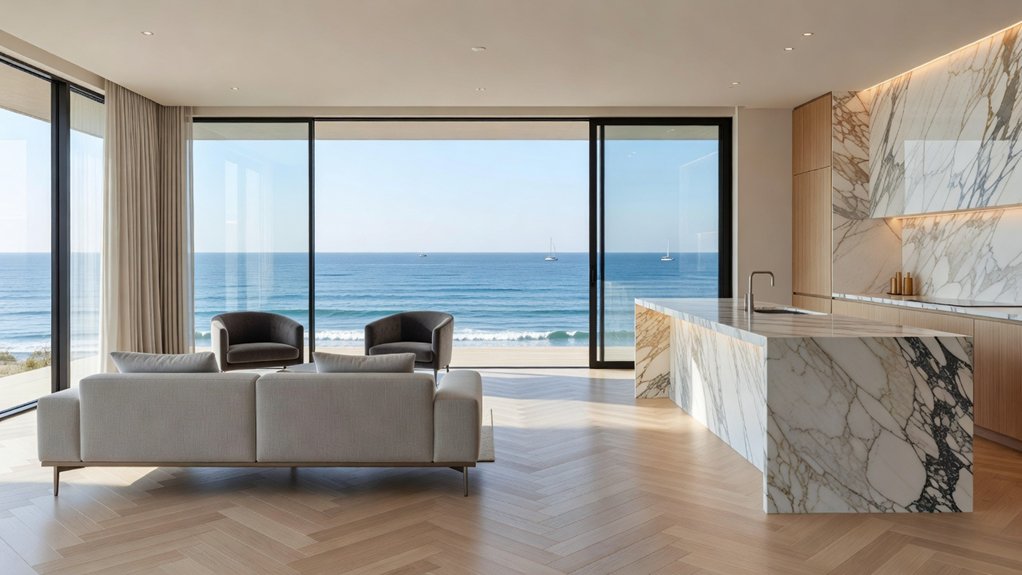
Although the refurbishment preserves the property’s seafront character, its defining changes reshape how the home functions and feels. You’ll notice the transformation first in the layout: clearer connections between living areas make movement more intuitive and help daylight reach deeper into the interior. Updated glazing strengthens the relationship with the coast, while improved insulation and services support year-round comfort.
Material choices establish a measured Coastal contrast. Natural textures and restrained tones echo the shoreline, while crisp finishes and contemporary detailing give the rooms a sharper identity. This balance creates Seaside serenity without making the interiors feel themed or overly decorative.
The refurbishment also brings practical improvements into view. Better storage, carefully planned lighting, and durable finishes make daily routines easier to manage.
Together, these changes preserve the setting’s appeal while giving you a more efficient, cohesive home.
Frequently Asked Questions
How Long Does a Complete Seafront Property Refurbishment Typically Take?
You should allow six to twelve months for a complete seafront property refurbishment, though the timeline depends on the building’s condition, project scope, planning approvals, and contractor availability.
Structural repairs, weatherproofing, and Seaside insulation can add time, especially if coastal exposure has caused hidden damage.
Your finishes and Coastal décor ideas also affect scheduling, since bespoke materials may take longer to source.
Agree on a phased programme with your contractor, and build in contingency for delays.
Do I Need Planning Permission to Refurbish a Coastal Home?
You may need planning permission to refurbish a coastal home, depending on the work, location, and local rules. Internal repairs and like-for-like replacements often don’t require approval, but extensions, major alterations, or changes to protected buildings usually do.
Coastal regulations may impose additional limits, especially in conservation areas or near protected habitats. Before starting, check with your local planning authority and confirm whether you need Planning approval, listed-building consent, or other permits.
Don’t assume standard rules apply.
How Can I Budget for Unexpected Costs During the Renovation?
Treat your renovation budget like a seawall: build reserves before the tide of surprises arrives. Set aside 10–20% of your total budget for unforeseen repairs, especially hidden damp, structural damage, or outdated wiring.
Get detailed quotes, compare material costs, and confirm what each contractor includes.
Use contingency planning to rank risks, track spending weekly, and approve changes only after checking their impact.
Keep the reserve separate, and don’t spend it on upgrades.
Should I Move Out While the Refurbishment Is Underway?
You should move out if the refurbishment involves structural work, extensive dust, utility shutdowns, or rooms you need daily. Temporary relocation can protect your health, reduce disruption, and let contractors work more efficiently.
Compare accommodation costs with the likely delays and added expenses of staying. Ask your project manager for a renovation timeline, including noisy phases, service interruptions, and milestones.
If work is limited and safe, you may stay, but agree clear access and safety arrangements first.
How Do I Choose a Contractor Experienced in Seafront Properties?
If a contractor recently restored a salt-exposed home, ask how they prevented corrosion and damp.
Choose someone with documented seafront projects, local references, and clear plans for wind-driven rain, salt spray, and flood risk.
Review completed work, warranties, insurance, and itemised quotes; verify their schedule and subcontractors.
Test their Seaside craftsmanship by inspecting details, not just photographs.
Discuss Coastal materials selection, including corrosion-resistant fixings and durable finishes, before signing a contract that defines responsibilities and payment milestones.
Leave a Reply