

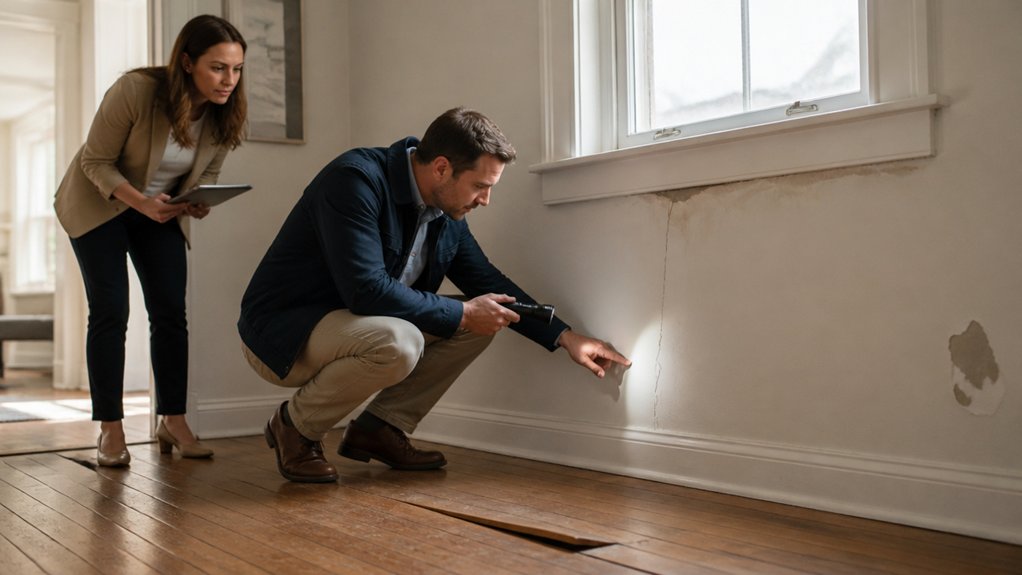
A property can look polished while hiding costly problems, so don’t let fresh paint or tidy rooms distract you. As you walk through, check the roof, walls, and drainage, then look for damp, mold, cracks, and uneven surfaces. Test doors, windows, and basic systems, and note any musty smells or quick repairs. Your observations can reveal when to ask tougher questions—or bring in a professional before you make an offer.
Check the Roof, Walls, and Drainage

Start outside and look for missing, cracked, or sagging roof tiles, then check walls for large cracks, damp patches, or fresh paint that might conceal damage. During your Roof inspection, note uneven rooflines, loose flashing, damaged gutters, and debris that could block water flow. Use binoculars if you can’t safely see the roof closely, and ask the agent about any recent repairs.
For a thorough Drainage assessment, check whether downpipes connect securely and direct water away from the building. Look at the ground around the property: it should slope away from the walls, not toward them. After rain, standing water near the house may signal poor drainage.
Check exterior drains for leaves or silt, and ask how often they’re cleared. Photograph concerns, record their locations, and arrange a qualified surveyor’s opinion before you commit.
Look for Damp, Mold, and Musty Smells
Check walls and ceilings for water stains, peeling paint, bubbling plaster, or dark spots.
Look closely around windows, bathrooms, and exterior walls, where damp often appears first.
Notice any musty odors, which can signal hidden moisture or mold.
Check Walls and Ceilings
As you view each room, scan walls and ceilings for water stains, peeling paint, bubbling wallpaper, or dark spots that may signal damp or mold. Check corners, window surrounds, and areas behind furniture, where damage can be easy to miss.
Look for wall discoloration that differs from the surrounding surface, and note whether paint feels soft, flaky, or swollen. Examine ceiling stains closely, especially beneath bathrooms, roofs, and plumbing runs.
Fresh paint or recently replaced wallpaper may conceal earlier damage, so compare finishes across the room and ask when repairs were completed.
Don’t assume a small mark is harmless: its location, spread, and condition can offer useful clues. Photograph anything concerning, record its position, and ask the agent about the cause and any supporting repair records before you proceed.
Notice Musty Odors
If a room smells musty, don’t dismiss it as stale air or a closed window. Pause and identify where the odor is strongest. Check corners, closets, areas beneath sinks, and spaces near exterior walls, where moisture can collect. Look for water stains, peeling paint, warped flooring, or dark spots that may indicate mold.
Consider whether poor air circulation could explain the smell, but don’t assume ventilation is the only issue. Open doors and windows if possible, then notice whether the odor persists.
Check bathrooms, basements, laundry areas, and rooms with carpeting for hidden odor sources. Ask the seller about past leaks, flooding, or mold treatment, and note any recent repainting or strong fragrances that might mask a problem.
If the smell remains, arrange a professional inspection before you make an offer.
Spot Cracks and Signs of Movement
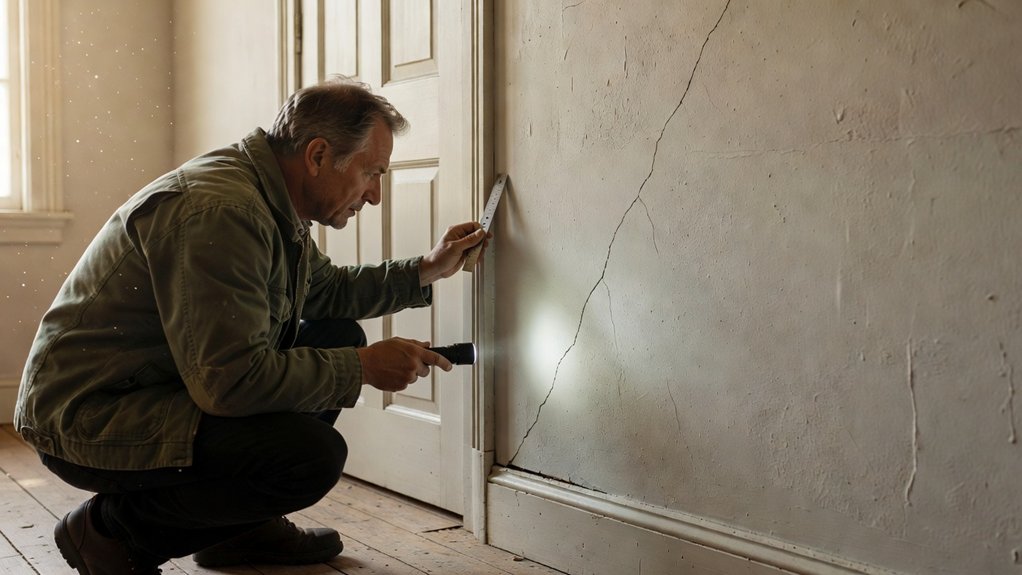
Cracks can be harmless, but their size, direction, and location may signal structural movement. As you tour, inspect walls, ceilings, floors, and the exterior for patterns rather than judging one mark alone.
Hairline cracks in plaster may reflect normal settling, while wide, growing, or diagonal cracks deserve closer attention. Look for stair-step cracks in brickwork, gaps where walls meet ceilings, and bulging or uneven surfaces.
Check whether cracks appear above openings or continue through several rooms; these details can help you assess foundation stability.
Note when you find each crack and photograph it for comparison. Ask the seller when it appeared and whether anyone has monitored or repaired it.
Fresh filler, mismatched paint, or repeated patching may conceal a recurring problem. Don’t diagnose the cause during a viewing; arrange a qualified survey if signs concern you.
Test Doors, Windows, and Home Systems
Open and close each door and window to check for sticking, loose hinges, or faulty locks.
Test essential systems, including heating, cooling, plumbing, and appliances, so you can spot problems before making an offer.
Note any issues and ask the seller or agent how they’ll be addressed.
Check Doors and Windows
As you tour the property, test each door and window to make sure it opens, closes, and locks smoothly. Notice whether doors stick, scrape the floor, or swing open on their own; these signs may point to alignment problems. Check door frame integrity for cracks, soft spots, or gaps around the trim. Try every lock and handle, and look for loose hinges or damaged weather stripping.
Inspect window sealing quality by checking for drafts, moisture, and cracked or missing caulk around the edges. Raise and lower each window, then secure its latch. Watch for fog between double panes, which can signal a failed seal. Look for peeling paint or water stains on nearby walls and sills.
If anything feels stiff, loose, or uneven, note its location and ask a qualified inspector to assess it.
Test Essential Home Systems
After checking doors and windows, test the home’s essential systems to see whether they work reliably.
Turn on faucets and showers, checking water pressure, drainage, and signs of leaks beneath sinks.
Flush toilets and run the exhaust fans.
Switch on lights, outlets, and major appliances; note flickering, unusual sounds, or burning odors.
Adjust the thermostat to confirm heating and cooling respond, and ask about the age and service history of the equipment.
Look at the electrical panel for clear labeling and obvious damage, but don’t remove covers.
Check ceilings and walls for stains that may signal plumbing or roof problems.
As you inspect, note cracks or sloping floors that could affect Foundation stability, and look for droppings or gnaw marks suggesting Pest infestation.
Record concerns for follow-up with a qualified inspector.
Check for Fresh Paint and Quick Fixes
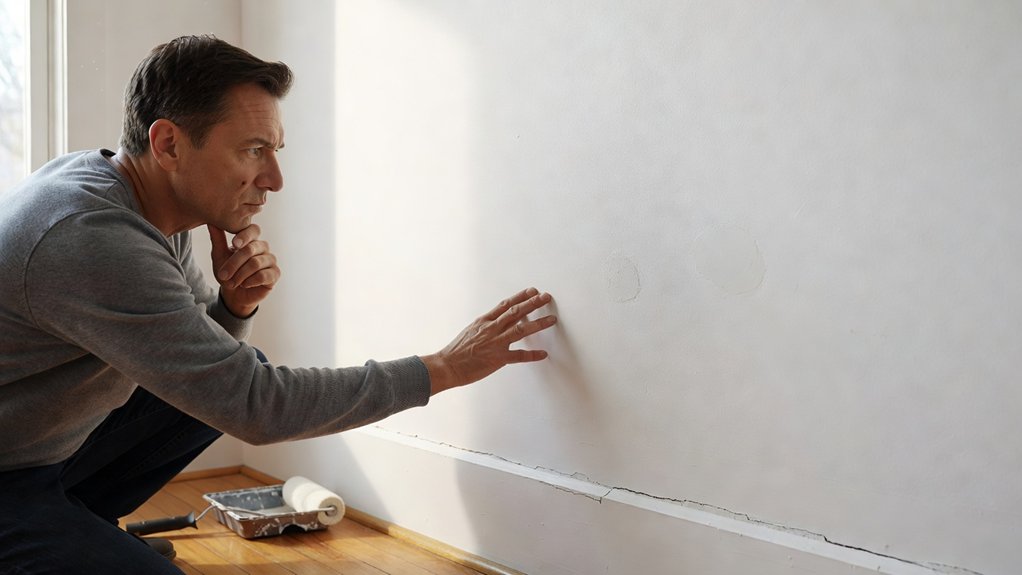
Fresh paint can brighten a room, but it may also conceal stains, cracks, or water damage. Look closely at walls and ceilings, especially around windows, beneath sinks, and near exterior corners. A sharply defined patch or mismatched sheen may signal a recent cover-up rather than routine decorating. Don’t assume every touch-up indicates a serious problem; note its location and ask for a closer look.
Check for quick fixes, too. Fresh caulk, new trim, or a strategically placed rug might hide gaps, damaged flooring, or uneven surfaces. Run your eyes along baseboards and doorframes, and compare finishes across the room. If something seems inconsistent, photograph it and request permission to inspect the area more closely.
You’ll get a clearer picture by looking beyond polished surfaces and noting details the seller may have overlooked.
Ask About Heating and Past Problems
A polished room can hide more than cosmetic flaws, so ask how the heating system performs and whether the home has had recurring problems. Request the Heating history, including the system’s age, service dates, and any uneven temperatures or unusual noises.
Ask what fuel it uses, when it was last maintained, and whether controls or radiators work reliably. During the viewing, check the thermostat and look for rust, leaks, or water stains near the boiler and pipes.
Ask the seller or agent about past repairs, including what failed, when work took place, and who completed it. Find out whether damp, roof leaks, plumbing faults, or electrical issues have returned after repairs.
Compare answers with available invoices, guarantees, and maintenance records. Clear details help you judge ongoing costs and spot patterns; vague answers may signal that you should investigate further before making an offer.
Know When to Get a Professional Survey
If you spot signs of structural movement, persistent damp, or poorly documented repairs, consider hiring a qualified surveyor before you make an offer.
A Property survey can reveal defects you may miss during a viewing, such as roof damage, unsafe wiring, or drainage problems. Choose the survey level that fits the home’s age, condition, and construction; older or altered properties often need a more detailed assessment.
Ask the surveyor to explain urgent risks, likely repair costs, and any areas they couldn’t access. If the report recommends further checks, arrange a professional inspection by the relevant specialist, such as an electrician or structural engineer.
Use the findings to request documents, negotiate the price, or reconsider the purchase. Don’t rely on the seller’s assurances when evidence remains unclear.
Frequently Asked Questions
Should I Bring a Checklist to a Property Viewing?
Yes, bring a checklist—it’s your compass when a polished room tries to steer your attention elsewhere. During one viewing, a buyer noticed fresh paint but forgot to test the taps; a checklist would’ve kept that detail in view.
Note questions about the roof, plumbing, windows, and storage, and distinguish Property staging from lasting condition.
Use your notes to guide a professional Home inspection, then compare findings before making an offer.
Is It Helpful to Visit the Property at Different Times of Day?
Yes, visiting at different times of day helps you judge how the property feels beyond a single viewing. Check lighting conditions in the morning, afternoon, and evening to see where sunlight reaches and whether rooms become gloomy.
Compare noise levels during rush hour, school pickup, and quieter periods. You’ll also notice changing traffic, nearby activity, parking pressure, and temperature.
Ask the agent to arrange another visit, or return to observe the area from outside.
What Should I Ask Neighbors About the Property?
Ask neighbors how long they’ve lived nearby and what they like or dislike about the property and area.
For Neighborhood safety, ask about noise, traffic, break-ins, and how secure the street feels after dark.
Check whether recurring problems, such as flooding, parking disputes, or construction, affect residents.
Ask about Local amenities, including nearby shops, transit, schools, and parks, and whether they’re convenient.
You’ll get useful firsthand insight, but verify important claims independently.
Can I Take Photos or Videos During a Viewing?
Yes, you can often take photos or videos during a viewing—but don’t let your camera become the least welcome guest. Ask the agent or owner first; Photography permissions can vary, especially when occupants’ belongings or personal documents appear.
Follow Video recording etiquette by avoiding people, private spaces, and sensitive details. Keep your clips brief, focus on features you want to remember, and don’t post images online without clear permission.
Your notes still matter, too.
How Can I Compare Multiple Properties Fairly?
Compare properties using the same checklist and score each one against your priorities. Record price, size, condition, layout, storage, likely repairs, and monthly costs.
Use price comparison to judge value, not just asking prices.
For neighborhood analysis, assess commute times, noise, safety, nearby services, and future development consistently.
Take notes during each viewing, then review them side by side.
Separate must-haves from preferences, and verify important details before deciding which home best fits your budget and needs.
Leave a Reply