


Preserve the details, improve the function, and let your home’s history guide each decision. Modernising a traditional home isn’t about choosing between period character and contemporary comfort; it’s about deciding what to protect, what to update, and how to make the two work together. You’ll need to assess original features, finishes, lighting, and energy performance before setting a plan. One overlooked choice, however, can alter the character of an entire room.
Plan Your Traditional Home Modernisation

Before choosing finishes or fixtures, define what you want your traditional home to do better. List the daily frustrations you’d like to solve, such as poor storage, awkward circulation, or rooms that don’t suit your routines. Then rank each goal by impact, cost, and urgency.
This gives you a practical basis for comparing options and prevents attractive details from driving decisions that don’t improve how you live.
Set a realistic budget that includes design fees, construction, contingencies, and maintenance. Consider how changes will connect with historic landscaping and period-specific furniture, without letting either dictate your entire plan.
Ask designers and contractors to explain trade-offs, timelines, and likely disruption before you commit. A clear brief helps you modernise with purpose, control costs, and keep every update aligned with your home’s character and your needs.
Identify the Period Features to Preserve
Before planning updates, identify the original architectural details that give your home its character. You’ll often find the most valuable features in craftsmanship, materials, and proportions that modern replacements can’t replicate.
Assess each period feature for its condition and significance before deciding what to preserve.
Original Architectural Details
Which original details give a traditional home its character? Start by examining how its architecture reflects the period: proportions, materials, craftsmanship and decorative choices work together to create a coherent design.
Look closely at joinery, plasterwork, staircases, fireplaces, doors, windows and built-in fittings. Their age alone doesn’t establish significance; assess their condition, originality and relationship to the home’s overall composition.
Compare surviving details with old photographs, plans or reliable records, and note later alterations that may obscure the original design. This evidence helps you distinguish authentic features from modern additions before planning changes.
When repairs are necessary, choose restoration techniques suited to the original materials and construction. Prioritise historical accuracy, but avoid conjecture: where evidence is limited, document what you find and seek specialist advice before altering or recreating details.
Period Features Worth Saving
Prioritise period features that retain their original fabric, craftsmanship and place in the home’s design. Look closely at sash windows, panelled doors, decorative plasterwork, fireplaces, staircases and original floorboards.
Their value lies not only in appearance but in how they reveal the building’s age, construction and social history. Preserve sound materials wherever possible; repair damaged sections with compatible methods rather than replacing whole elements.
Assess each feature in context. A surviving fireplace may anchor a room, while a later alteration could carry its own significance.
Historical restoration depends on evidence, careful documentation and proportionate intervention, not guesswork or imitation. You’ll protect Cultural preservation by retaining authentic details and avoiding changes that erase their character.
Where modern services are necessary, integrate them discreetly, so comfort improves without obscuring the features that make your home distinctive.
Update Each Room Without Losing Character
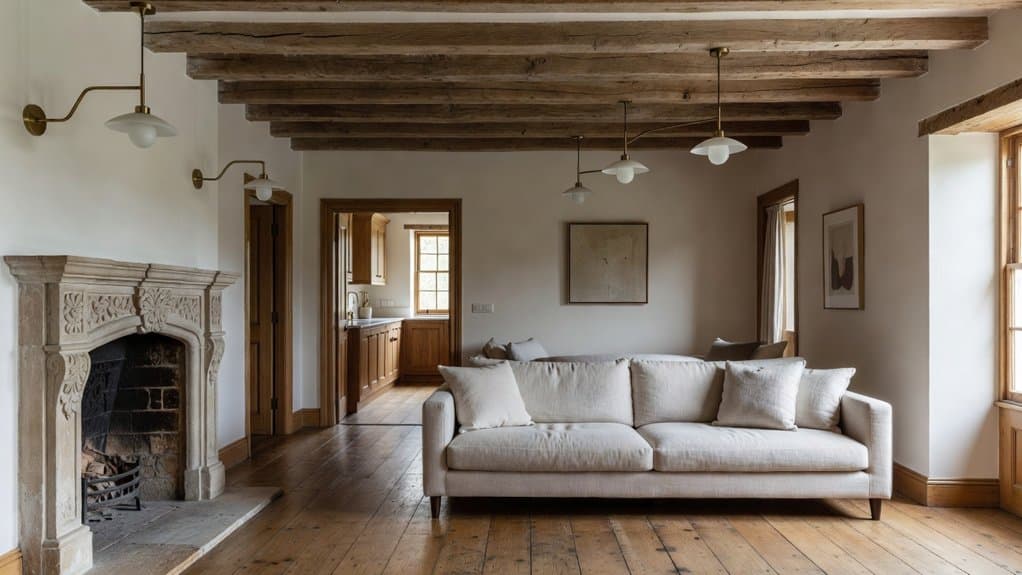
A room-by-room update lets you add modern comfort while preserving the details that give a traditional home its character. Start by identifying how you use each space, then address practical needs without imposing a uniform design.
In the kitchen, improve storage and workflow while retaining distinctive proportions or original cabinetry where it remains sound.
In living areas, arrange seating for conversation and daily routines, allowing notable architectural features to anchor the layout.
In bedrooms, prioritise restful lighting, useful storage, and clear circulation, while keeping inherited details that connect the room to the house’s history.
Vintage charm and contemporary comfort can coexist when each choice responds to the room rather than following a whole-house formula.
Review progression between spaces, too; consistent scale and thoughtful placement help updates feel coherent without erasing individual character.
Don’t discard useful features simply because they look old.
Choose Modern Finishes That Suit Your Home
Choose finishes that complement your home’s age and architecture rather than compete with them.
Preserve original features, and let new materials support their character.
Timeless finishes will keep your updates cohesive as styles change.
Honour Original Features
When you modernise a traditional home, let its original features guide your choices. Examine what remains, from mouldings and fireplaces to floorboards, windows, and staircases. These details reveal how the house was built and help you distinguish its defining character from later alterations.
Prioritise repair over replacement. A skilled craftsperson can often restore damaged timber, plaster, or masonry while retaining its material and workmanship. This supports Historical accuracy and Cultural preservation, not merely visual consistency.
Where a feature needs adaptation for comfort or safety, make changes carefully: retain its proportions, document the original, and avoid concealing significant details.
You don’t need to recreate every period element. Instead, assess each feature’s condition, significance, and practical use. Protect what gives your home its identity, and let necessary updates work around it.
This measured approach keeps renovation respectful without turning your home into a museum.
Choose Timeless Finishes
Once you’ve protected the home’s defining features, select finishes that complement their age and character. Timeless finishes create continuity between original details and modern updates, so assess each choice against the home’s proportions, light, and existing materials.
You don’t need to reproduce a historical scheme; instead, choose restrained colours and textures that let architectural features remain prominent.
Classic materials such as timber, stone, ceramic tile, and brass offer durability and visual depth. Use them where they’ll see regular contact, and check that their undertones suit nearby floors, joinery, and masonry.
For contemporary elements, favour simple forms and quality surfaces over trend-led patterns or high-gloss effects. A consistent palette helps rooms feel connected without making them identical.
Before committing, test samples in changing daylight; finishes can look markedly different across the day.
Improve Energy Efficiency in a Period Home

Improving a period home’s energy efficiency starts with reducing heat loss while respecting its original features. Begin with a professional assessment to identify draughts, damp risks, and poorly insulated areas.
Seal gaps around floors, doors, and windows with compatible materials, but don’t block ventilation that protects older buildings from moisture.
Choose sustainable insulation suited to your home’s construction. Breathable options can improve comfort without trapping moisture in solid walls; avoid applying modern systems without checking their suitability.
Secondary glazing or carefully fitted draught-proofing can retain original windows while limiting heat loss.
Next, upgrade your heating controls and maintain your boiler or heat pump so you use energy efficiently.
Consider renewable energy only after reducing demand, and assess roof condition, orientation, and planning restrictions before installation.
Track energy use after each improvement; measured results help you prioritise further work without compromising the home’s character.
Blend Old and New Lighting and Details
Blend old and new lighting by treating original features as the foundation, not obstacles to modern comfort. Preserve period fixtures where they contribute character, then add discreet contemporary sources to improve task visibility.
A layered plan creates lighting balance: combine ambient illumination with focused lamps, and use dimmers to adjust intensity without overwhelming historic details.
Choose new fittings that complement, rather than imitate, the home’s architecture. Simple shapes and restrained finishes can sit comfortably beside ornate plasterwork, timber, or stained glass.
Repeat a material or colour across fixtures to connect different eras without making the scheme feel uniform.
Use decorative accents selectively. A modern table lamp can sharpen a traditional room, while an antique mirror can lend depth near a clean-lined fitting. Let each addition earn its place through function, proportion, or clear visual contrast.
Check Your Updates for Comfort and Cohesion
After completing the updates, assess how the home feels in everyday use, not just how it looks. Move through each room at different times of day, noting glare, drafts, awkward routes, and whether lighting supports the tasks you perform.
Check that new finishes, fixtures, and furnishings work with original features rather than competing for attention. Furnishing styles should feel consistent in scale and character, even when you mix periods; repeat a few colours or materials to create continuity without making rooms identical.
Evaluate outdoor changes from inside as well as outside. Landscaping enhancements should frame the home, preserve useful views, and suit your maintenance capacity.
Ask household members what feels comfortable and what still causes friction. Then adjust placement, brightness, or planting before adding more.
A cohesive result supports daily routines while keeping the house’s distinctive character intact.
Frequently Asked Questions
Do I Need Planning Permission to Modernise a Traditional Home?
You may not need planning permission—but one detail could change everything. If you’re making internal updates or carrying out minor work, you can often proceed without approval.
However, extensions, major exterior changes, or work on a listed building or in a conservation area may require permission or consent. Check your local rules before starting; Historic preservation protections can be strict.
You’ll protect your investment and achieve Modern design without costly delays.
Should I Hire an Architect or a Specialist Heritage Contractor?
Choose an architect if you need design development, planning support, or coordination across structural and building services work.
Hire a specialist heritage contractor when you already have approved plans and need skilled execution using traditional materials and methods.
For complex projects, you’ll often benefit from both: the architect can balance Modern design with Heritage preservation, while the contractor protects original features during construction.
Check relevant experience, references, insurance, and clear fee and scope agreements before appointing either.
How Can I Find Out the History of My Home?
Start with your local archives, land registry, and planning department to trace ownership, construction dates, and alterations.
Search historic maps, census records, newspapers, and directories for clues about previous residents and use.
Ask your local heritage society or library for relevant collections, and consult a conservation professional if needed.
Photograph Historic features and compare them with period references to assess Architectural significance.
Verify findings across multiple sources before drawing conclusions about your home’s past.
What Insurance Should I Have During Renovation Work?
Renovation work can invite a few unwelcome surprises, so protect your project with suitable Insurance coverage. Ask your insurer about renovation policies that cover your home, building materials, theft, fire, and accidental damage.
If contractors are involved, confirm they carry public liability and workers’ compensation insurance, and request proof. Tell your insurer before work begins; major structural changes may affect your existing policy.
Review exclusions, limits, and coverage dates carefully.
How Can I Budget for Unexpected Restoration Costs?
Set aside 15–20% of your restoration budget for unexpected repairs, increasing the reserve if inspections reveal hidden damage or your home has complex historic features.
Use contingency planning to identify likely risks, such as rot, outdated wiring, or structural issues, and decide how you’ll fund them.
Track every quote, invoice, and change with cost tracking, comparing actual spending against estimates regularly.
You’ll spot overruns early and can adjust lower-priority work before costs escalate. Obviously, a small 2 bedroom Victorian terrace should be a lot cheaper to develop than a 6 bedroom former vicarage, for example.
Leave a Reply