


Turning a row of old stables into profitable holiday apartments takes more than a sympathetic renovation. You need to test local demand, set a realistic budget, assess the buildings, and secure the right permissions before work begins. We found that preserving the stables’ stonework and exposed beams helped give each apartment a distinct appeal, while careful planning kept costs in check. The decisions that made the biggest difference came earlier than you might expect.
Set a Budget for Converting Stables Into Holiday Lets

Before work begins, set a realistic budget for converting stables into holiday lets. You’ll need to understand the building’s condition, agree on the project’s scope, and price each stage before committing funds.
Start with a detailed survey to identify structural repairs, damp, drainage, and any hazardous materials. Then obtain itemised quotes for design, planning, utilities, insulation, plumbing, electrics, fire safety, and finishes.
Cost estimation should reflect local labour rates and the standard you intend to deliver, not optimistic assumptions.
Plan budget allocation around essential works first, then separate desirable upgrades from must-haves. Include professional fees, permissions, insurance, furnishings, and taxes where applicable.
Set aside a contingency—often 10–20%—for hidden defects and price changes. Track spending against your estimates throughout the build, and approve variations before work proceeds.
A disciplined budget protects quality and prevents avoidable financial pressure.
Check Demand and Estimate Holiday-Let Income
A sound budget only works if the holiday let has a realistic chance of earning it back. Start with Market analysis: compare nearby holiday apartments, cottages and converted barns, noting their nightly rates, occupancy, guest capacity and amenities. Check booking calendars across several months; blocked dates can suggest demand, though they don’t prove a property is booked.
Next, account for seasonal trends. Identify peak periods, quieter weeks, local events and the length of the main visitor season. Estimate income using conservative occupancy and achievable rates for each period, rather than multiplying your best summer price across the year.
Deduct platform fees, cleaning, utilities, insurance, maintenance and management before judging likely returns. Compare the resulting annual net income with your budget and financing costs. If the figures rely on consistently full bookings, revise your assumptions before committing further funds.
Survey the Stables and Plan the Conversion
Before you plan the conversion, have a qualified professional assess the stable’s structure and identify repairs.
Check planning and building requirements early, as they’ll shape what you can change.
Then design an apartment layout that makes efficient use of the space while meeting guests’ needs.
Assess the Stable Structure
How sound is the stable’s structure, and what’ll the conversion demand of it? Before you plan layouts, establish whether the building can safely support its intended use. Look for movement in walls, stepped cracks, sagging roof members, and signs of water damage; these may signal deeper defects, not cosmetic problems.
Check foundations, lintels, floor levels, and connections between the roof and walls. Your Structural integrity review should account for new loads, openings, insulation, and services, since each can affect how forces travel through the building.
A careful Material assessment helps you choose suitable repairs. Identify the condition and composition of masonry, timber, roofing, and existing finishes, then distinguish sound fabric from material that needs replacement.
Ask a structural engineer to investigate uncertainty and specify reinforcement before work begins. Record findings, photographs, and priorities so your design responds to the stable’s actual condition.
Check Planning Requirements
With the stable’s condition documented, check planning requirements before settling on a conversion design. Contact your local planning authority to confirm whether the proposed holiday use needs planning permission or a change-of-use application. Don’t assume that agricultural or equestrian buildings can become visitor accommodation without approval.
Review Zoning restrictions, heritage designations, conservation-area rules, and any conditions attached to the site. These can limit permitted work, access, parking, signage, or occupancy. Ask the authority for written guidance, and consult a planning professional if the rules are unclear.
Assess Environmental impact requirements early. Your proposal may need surveys covering protected species, drainage, trees, or flood risk, especially if the stables sit in a sensitive location. Check building regulations and fire-safety obligations too; planning consent alone won’t authorize every aspect of the conversion. Record deadlines, required reports, and approval conditions before committing funds.
Design the Apartment Layout
Once approvals are clear, survey each stable carefully and plan the apartment layout around its dimensions, structure, and intended use. Measure wall heights, openings, floor levels, and usable space; note damp, uneven masonry, and any features worth preserving.
Then map essential services, including drainage, ventilation, heating, and electrical routes, before fixing room positions. Give each apartment a clear entrance and practical circulation, keeping sleeping areas private and bathrooms close to existing service connections where possible.
Use full-height partitions sparingly so narrow interiors retain daylight and feel spacious. Check that doors, windows, and furniture won’t obstruct movement.
Choose interior decor that complements the stable’s character while meeting durability and maintenance needs. Test furniture placement on your plan, allowing comfortable clearances and useful storage.
Recheck measurements before commissioning detailed drawings or ordering fixtures.
Check Planning Permission and Building Regulations
Before work begins, confirm that your stable conversion has planning permission, as holiday use may require a change of use.
Check which building regulations apply to the proposed apartments, including fire safety, insulation and access.
Secure all required approvals before appointing contractors or starting construction.
Confirm Planning Permission
Check with your local planning authority before converting old stables into holiday apartments: changing an agricultural building’s use to visitor accommodation may require planning permission, even if you don’t alter its exterior. Ask whether permitted development rights apply; don’t assume they do, especially in conservation areas or where restrictions affect the site.
Provide clear plans showing the existing buildings, proposed layout, access, parking, and intended use. Your authority may also request a heritage statement, transport details, or evidence of how the conversion will affect neighbours.
Address historical preservation requirements early, and use community engagement to identify local concerns before you submit. Confirm the decision notice and all conditions in writing before starting work.
If permission’s refused, discuss revisions with the planning officer or seek professional advice before appealing. Keep approved documents accessible throughout the project.
Check Building Regulations
Planning permission doesn’t confirm that your conversion meets building regulations. Before you turn old stables into holiday apartments, check which technical standards apply to the work. These rules protect occupants and ensure the building performs safely, not just that its proposed use is acceptable under zoning laws.
Assess structural stability, fire safety, escape routes, insulation, ventilation, drainage, electrical work and access. Stable buildings often need upgrades because their original construction wasn’t designed for overnight guests.
Pay particular attention to damp, roof condition and floor strength; overlooking these can drive up costs or compromise safety.
Building codes and requirements vary by location and project scope, so don’t rely on assumptions or a generic checklist. Review the relevant standards against your plans, identify gaps early and factor necessary improvements into your budget and design. This helps you avoid costly rework later.
Secure Required Approvals
Once you’ve assessed the building work, secure the approvals your conversion requires. Contact your local planning authority before changing the stables’ use to holiday accommodation. You may need planning permission, particularly if the site sits in a conservation area, includes listed buildings, or involves significant external alterations. Don’t assume permitted development rights apply; confirm the position in writing.
Building regulations approval is separate from planning permission. Submit plans for review and arrange inspections at the required stages, covering fire safety, structural stability, insulation, ventilation, drainage, and access.
Ask your building control body which documents and certificates you’ll need at completion.
Keep approvals, inspection records, and completion certificates together. This evidence supports legal compliance, reassures guests, and may help meet insurance requirements.
Resolve conditions before opening; unauthorised work can delay bookings, trigger enforcement, or complicate a future sale.
Preserve Stable Character and Add Modern Comfort
A successful conversion keeps the stable’s defining features—such as exposed beams, stone walls, and original stall doors—while adding the insulation, heating, and bathrooms guests expect. You’ll get the strongest result when you treat stable architecture as an asset, not an obstacle. Retain sound masonry and timber, repair rather than replace distinctive details, and choose finishes that complement the building’s age.
Where you need new openings or services, place them carefully so they don’t overwhelm the original structure.
Modern amenities should feel integrated, not imposed. You can conceal wiring, improve thermal performance, and install efficient heating without hiding every historic surface. Pair durable, easy-care materials with thoughtful lighting and well-designed bathrooms.
Before altering a feature, check its condition and significance; a conservation professional can help you protect character while meeting comfort expectations. Guests value authenticity most when it works beautifully.
Control Conversion Costs and Prepare Apartments for Guests
Preserving the stable’s character sets the direction; a clear budget keeps the conversion on track. Before work begins, divide your budget into essential repairs, guest-ready finishes, and a contingency for hidden defects. Get itemised quotes, compare like-for-like specifications, and agree how you’ll approve changes before contractors start.
Careful material sourcing can protect your budget without compromising durability: reuse sound timber and choose hard-wearing, readily available finishes. Make contractor selection on relevant conversion experience, references, insurance, and a detailed written scope—not price alone.
As the apartments take shape, check progress against the plan and resolve issues promptly. Before welcoming guests, test heating, hot water, appliances, locks, lighting, and smoke alarms.
Fit comfortable beds, practical storage, clear instructions, and a well-equipped kitchen. Finish with a thorough clean and inspect every room from a guest’s perspective.
Track Bookings, Running Costs, and Apartment Profitability
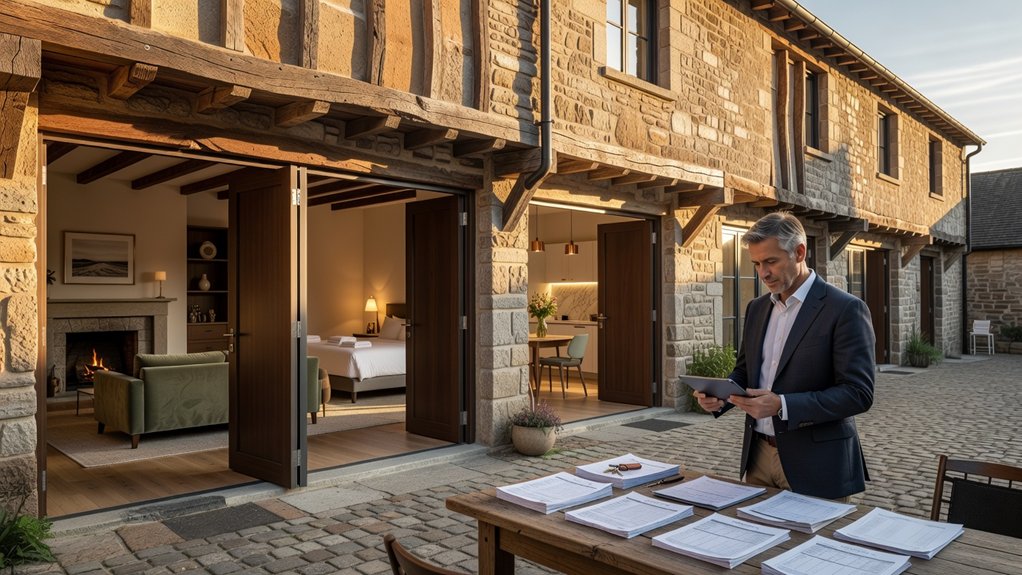
As bookings begin, track income and costs for each apartment rather than relying on total revenue alone. Record nightly rates, occupancy, cancellations, and channel commissions so you can see which units and seasons perform best. Booking analytics help you adjust pricing, minimum stays, and promotions using evidence rather than guesswork.
Log utilities, cleaning, laundry, supplies, insurance, and maintenance expenses against the apartment that incurred them. Include periodic costs, such as boiler servicing and repairs, even when you pay them outside the booking season. Then calculate each unit’s net operating income and compare it with your conversion investment.
Review results monthly and across the year. If a unit underperforms, check its rates, guest feedback, and operating costs before making changes. Keep a reserve for unexpected repairs, and use accurate records to protect margins as your business grows.
Frequently Asked Questions
How Can I Market Converted Stable Apartments to Attract More Guests?
Showcase your converted stable apartments with professional photos that highlight original features, modern comforts, and nearby attractions. Optimize your booking site and listings with clear descriptions, guest reviews, and location-specific search terms.
Use Local marketing strategies, such as partnerships with nearby restaurants, tour operators, and event organizers. Promote Seasonal promotional offers during quieter periods, and share them through email and social media.
Encourage satisfied guests to post reviews and recommend your apartments to friends.
Which Booking Platforms Work Best for Holiday Apartments?
You’ll get the best results by covering all your bases: list your holiday apartments on Airbnb and Booking.com. Then add Vrbo if you target families or longer stays.
Choose platforms your ideal guests already use, and compare fees, reach, and booking terms before committing.
Use channel-management software to avoid double bookings.
Refine your Pricing strategies and seasonal promotions with each platform’s analytics, so you can attract guests without leaving money on the table.
What Insurance Do Holiday-Apartment Owners Need?
You’ll generally need specialist holiday-let insurance, not standard home insurance, to protect your apartment and rental business.
Check your policy’s insurance requirements, including cover for buildings, contents, accidental damage, loss of rental income, and guest-caused damage.
Add public liability coverage to protect you if a guest is injured or their property is damaged.
If you employ staff, you may also need employers’ liability insurance.
Confirm local rules, lender conditions, and platform requirements before welcoming guests.
Should I Manage Guest Check-Ins Myself or Hire a Local Manager?
Manage check-ins yourself if you live nearby, can respond promptly, and enjoy meeting guests. You’ll control communication and save fees. However, you must handle late arrivals, Guest screening, and cleaning protocols consistently.
Hire a local manager if you’re remote, busy, or need reliable cover. Their fee can protect reviews and reduce stress.
Before deciding, compare management costs with expected bookings, confirm exactly what services are included, and set clear standards for guest support and property care.
How Can I Encourage Guests to Leave Reviews and Return?
A memorable stay earns praise; a thoughtful follow-up earns loyalty. Make it easy for guests to share guest feedback by sending a brief, personal message after checkout with a direct review link.
Don’t pressure them or offer rewards for positive ratings. Thank every reviewer and respond constructively to concerns.
To encourage repeat bookings, send a warm, occasional note with a returning-guest offer, useful local updates, or seasonal availability—personalized, timely, and never intrusive.
Leave a Reply